

Where earlier decades saw greater international sympathy for Sahrawi independence or a UN-mediated referendum on the territory’s future, the diplomatic tide has shifted unmistakably towards Morocco over the past half-decade.
Amid the ongoing friction between Iran and the United States and its destabilising ripple effects across the Middle East, Washington and other global powers are devoting renewed attention to a parallel strategic priority elsewhere in the Arab world: stabilising North Africa by resolving one of the region’s most enduring territorial disputes, Western Sahara. This resource-rich territory, roughly half the size of France but home to only around 600,000 people (about the size of France’s second-largest city Lyon), one of the most sparsely populated places on Earth, has long been counted among the world’s most intractable conflicts. Solving it would mark a significant win for regional stability, particularly as a counterweight to the more fractious Arab regions further east and lower tensions between the area’s two most powerful countries.
A post-colonial territory in limbo
Straddling north-west Africa’s Atlantic coast, the former Spanish colony pits regional rivals Morocco and Algeria against one another so deeply that the two countries have kept their shared border closed since 1994 and, in some respects, built elements of national identity around opposition to their neighbour. Yet each has its own reasons for wanting the conflict resolved: Algiers hopes to arrest its growing international isolation and ease investor perceptions of geopolitical risk around its faltering “New Algeria” economic vision, while Rabat sees a chance to legitimise decades of de facto sovereignty and convert diplomatic momentum into permanent reality, not least ahead of its 2030 World Cup co-hosting. Both countries’ elimination from this summer’s World Cup may, ironically, temper nationalist bravado just enough to reorient priorities towards diplomacy and a spirit of compromise.
When Madrid withdrew from the territory in 1975, Rabat asserted ownership over this southern hinterland, citing historical claims and mobilising hundreds of thousands of citizens in the “Green March” to help establish facts on the ground; today, Morocco controls roughly two-thirds of the territory. Many Sahrawis resisted, forming the Polisario Front, an armed independence movement that pressed its cause internationally through the language of self-determination and indigenous rights. In 1976, the Front proclaimed the Sahrawi Arab Democratic Republic (SADR) and asserted control over the remaining third.
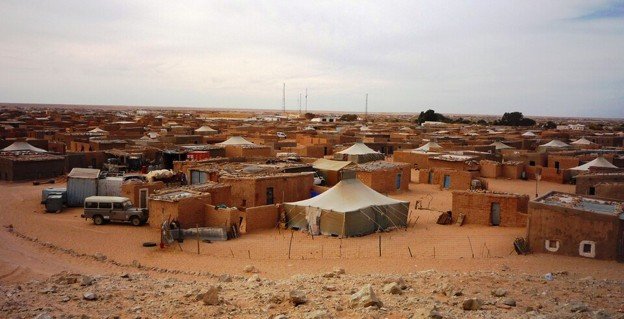
Algeria, eager to weaken its Maghrebi rival, offered the Polisario financial and diplomatic backing, hosting the movement’s leadership and displaced Sahrawi refugees in camps in its bordering Tindouf province. Population estimates vary widely, from roughly 90,000 to as many as 170,000, since no independent census has ever taken place — a gap Rabat says inflates the caseload and Algiers has resisted addressing. Rabat-aligned commentators go further, alleging Algerian territory has also hosted Polisario training camps with Iranian and Hezbollah backing. A decade-and-a-half war between the two sides proved inconclusive, frozen by a UN-imposed ceasefire in 1991 that has given way, since 2020, to sporadic clashes. The territorial split persists to this day, the two sides separated by the world’s longest physical barrier: a 2,700-kilometre, Moroccan-built sand berm, and a parallel minefield.
The diplomatic tide turns towards Rabat
Where earlier decades saw greater international sympathy for Sahrawi independence or a UN-mediated referendum on the territory’s future, the diplomatic tide has shifted unmistakably towards Morocco over the past half-decade. Resolution 2797, adopted by the Security Council in October 2025, for the first time endorsed autonomy “under Moroccan sovereignty” as the most feasible outcome and named Rabat’s 2007 plan as the negotiating basis — effectively reversing the Council’s 1991 Resolution 690, which had called for a Sahrawi referendum. Algeria, then a Council member, boycotted the vote altogether, and could secure only abstentions — rather than outright opposition — from its longstanding allies Russia, China and Pakistan.
The resolution capped a run of high-profile endorsements of Moroccan sovereignty: Washington’s under Trump’s first term in December 2020, part of Morocco’s normalisation with Israel, followed by Spain in 2022 and France in 2024. Britain has likewise drifted from its longstanding support for a referendum, with former Foreign Secretary David Lammy calling the autonomy plan the “most credible” option. Morocco says the plan now enjoys backing from more than 120 states, and French Prime Minister Sébastien Lecornu’s first foreign trip as premier — to Rabat, with a dozen ministers in tow — underlined how thoroughly support for Morocco’s stance has become bundled into broader strategic cooperation.
Enter Trump: Let’s make a deal
In February, the US spearheaded direct Western Sahara negotiations among the four named parties: Morocco, Algeria, the Polisario Front and Mauritania, the latter generally regarded as a neutral intermediary owing to its border with the disputed territory and its good relations with both feuding countries. UN Secretary-General António Guterres’s Personal Envoy, Staffan de Mistura, also took part, lending broader global legitimacy. The talks are organised around the Moroccan autonomy plan, reflecting its growing reference as the accepted starting point.
Progress in the Western Sahara negotiations is being kept deliberately low-profile. Some Italian and Spanish outlets have suggested the parties are edging towards “first glimpses” of a framework deal, while the International Crisis Group and other observers caution that no such text has been formally agreed, citing continued difficulty bridging the Moroccan and Algerian-Polisario positions on the scope of local autonomy. Washington’s point person, the Arab-American businessman Massad Boulos, has similarly suggested a deal may be reachable but requires a long, arduous process and considerable flexibility from all sides.
Each external power has its own reasons for investing time and resources in achieving a resolution. Washington’s approach reflects the Trump administration’s transactional style, extending its record of brokering reconciliation between old adversaries — as with the Abraham Accords and the Armenia–Azerbaijan normalisation track. The EU hopes that pacifying the Mediterranean’s southern shore will help curb irregular migration and shore up energy security as it decouples from Russian sources and seeks to avoid overdependency on unreliable supply from Libya and other conflict-plagued zones. The UN, meanwhile, hopes to convert last October’s resolution into a durable settlement, with added urgency ahead of the Council’s vote this autumn on renewing the mandate of its Western Sahara ceasefire monitoring mission, MINURSO.
Western Sahara’s wider geopolitical stakes
Washington’s push also reflects harder security calculations. Al-Qaeda- and Islamic State-affiliated militants have expanded across the Sahel following coups in Mali, Niger and Burkina Faso, whose juntas have since turned to Russia for security support, pushing militancy closer to Morocco’s southern flank and complicating the defence partnership the Pentagon has built with Rabat. A settlement cementing Moroccan control would let Washington deepen counter-terrorism cooperation without the diplomatic awkwardness of an unresolved sovereignty question.
Access to natural resources sharpen the incentive. Morocco and Western Sahara together hold some 70% of the world’s phosphate reserves, a vital fertiliser input amid supply strains from the Ukraine war and COVID-era disruption; the territory also has rich Atlantic fishing grounds and prospective, still-unconfirmed offshore hydrocarbons and onshore shale deposits along the Moroccan border. Washington and Paris are wary that stepping back over sovereignty scruples would simply hand these assets to an opportunistic Beijing and advance its global geopolitical ambitions at their expense. Morocco has folded this logic into its diplomacy, promoting an “Atlantic Initiative” giving landlocked Sahel states port access through Western Saharan territory — binding the dispute’s resolution to Sahel security and giving Rabat extra leverage in Washington, Paris and Brussels alike.
At the tactical level, Washington has also worked to loosen Polisario’s hold on representing Sahrawi opinion, with its Ambassador to the UN Mike Waltz engaging the Saharawi Movement for Peace (MSP), a group presenting itself as willing to accept autonomy under Moroccan sovereignty. Its leaders held high-level meetings in New York this month, framing US outreach as breaking Polisario’s decades-old “monopoly of representation” and citing support from Sahrawi tribal notables as grassroots legitimacy.
The Polisario’s declining options
The MSP outreach has provoked backlash from Polisario loyalists, who see it as manufacturing consent for a settlement their exiled base still rejects; de Mistura’s own visit to Tindouf in June appeared partly aimed at keeping Polisario’s leadership engaged even as Washington explores parallel channels. Separately, a bipartisan group of US lawmakers has proposed designating the Polisario as a terrorist organisation over alleged Iranian ties — allegations that, even if unproven, bode increasingly ill for the group.
Spain offers a cautionary precedent: Madrid’s Socialist-led government was once broadly sympathetic towards the Polisario, reflecting guilt over Spain’s colonial legacy and strong domestic pro-Sahrawi sentiment. Yet reporting suggests Polisario’s leadership has increasingly felt compelled to court Spain’s conservative opposition — historically unsupportive of Sahrawi self-determination — following a cold shoulder from the incumbent leadership, a sign of how thoroughly the left-leaning mainstream has absorbed the pro-Rabat consensus.
The SADR is also face eroding support within traditional Arab and African bastions. Gulf states including the UAE, Qatar and Bahrain have backed Morocco’s plan, and nearly 30 African, Arab and Caribbean states have now opened consulates in Laayoune and Dakhla, leaving Polisario and its Algerian patron increasingly isolated among traditional non-aligned partners.
Can Algiers afford to compromise?
Algeria’s domestic politics may prove a deciding factor in the fate of the talks. Strongman President Abdelmadjid Tebboune, re-elected in 2024 with a lopsided 84% of the vote, used this month’s parliamentary election — won convincingly by his allied FLN and other nationalist parties — to advance his “New Algeria” project. Turnout was barely 20%, the weakest since independence in 1962, reflecting voter disillusionment over tightening restrictions on expression since the 2019 Hirak protests that toppled Tebboune’s predecessor, alongside stagnant economic opportunity.
Notably, the Western Sahara issue was absent from the electoral campaign. Was this a sign that support for the Sahrawi cause is so ingrained across Algeria’s political spectrum that it no longer needs restating? Or did it suggest a public preoccupied with the cost of living had grown indifferent to a foreign policy cause that carries more emotional resonance than practical urgency? Either way, the result leaves Tebboune with a compliant assembly and greater room to manoeuvre on the Sahara file without parliamentary friction.
That manoeuvring room comes with a fork in the road. Advancing “New Algeria” and improving Algeria’s global diplomatic standing may require compromise on the country’s hardline position — but doing so risks domestic unrest and accusations of “treason” from across the political spectrum. Much may hinge on both the leadership’s political courage and the public’s willingness to reconsider what has long been regarded as a pillar of national identity in exchange for tangible economic gains.
Is a negotiated settlement within reach?
Whether these converging pressures — Trumpian transactionalism, European anxiety over migration and energy security, a UN mandate under a firm deadline, Algeria’s adaptation to a changing global order and a tentative pragmatism among Sahrawi representation — can overcome deep-seated hesitations remains uncertain. What has changed is the shape of the stalemate itself: for the first time in years, the parameters of a settlement — autonomy under Moroccan sovereignty, negotiated by four named parties, with firm international backing — are set, even if the substance of Sahrawi self-determination remains unresolved. With MINURSO’s mandate expiring on 31 October and a further round of negotiations reportedly planned for Paris in September, the coming months will show whether the Western Sahara file finally becomes solvable, or remains intractable beyond half a century.