

As Iran widens its retaliation against the Gulf monarchies, why is Israel largely spared and what does that reveal about Tehran’s changing strategy?
For the small monarchies of the Gulf, the past few months have delivered a bitter lesson in the limits of neutrality. Qatar, Bahrain, Kuwait, Oman and the United Arab Emirates have spent decades cultivating a delicate balancing act: hosting American bases and fleets that guarantee their security, while maintaining just enough cordiality with Iran across the water to avoid becoming targets themselves. That balancing act has now collapsed. Since a ceasefire between America and Iran broke down in early July, Tehran has repeatedly struck at its neighbours’ territory — airports, radar sites, fuel depots, desalination plants and even a tanker or two — reasoning that any facility hosting an American soldier or a barrel of American-bound oil is fair game.
The proximate cause of the latest escalation is the Strait of Hormuz, the 33km chokepoint through which a fifth of the world’s oil once flowed. An interim agreement reached in the spring had allowed shipping to pass without Iranian interference, in exchange for a pause in American strikes. That arrangement fell apart when Iran began asserting a right to control vessels’ routes through the strait and charge for passage — a claim no Gulf state or Western power was prepared to accept. When Iranian forces struck commercial shipping anyway, President Donald Trump declared the ceasefire dead and ordered a third round of American air strikes on Iranian territory. Tehran’s response has been to widen the war rather than end it, launching missiles and drones not at American soil, but at the six or seven Gulf states unlucky enough to sit closest to it.
As of Tuesday, the exchange shows no sign of slowing. American forces completed a third consecutive night of strikes on Iranian territory overnight, and Tehran responded on Tuesday morning by hitting two Emirati oil tankers in the Strait of Hormuz and triggering fresh missile alerts in Bahrain. War-risk insurance premiums for vessels transiting the strait are rising sharply, and shipowners and charterers are reportedly pausing transits altogether rather than run the gauntlet.
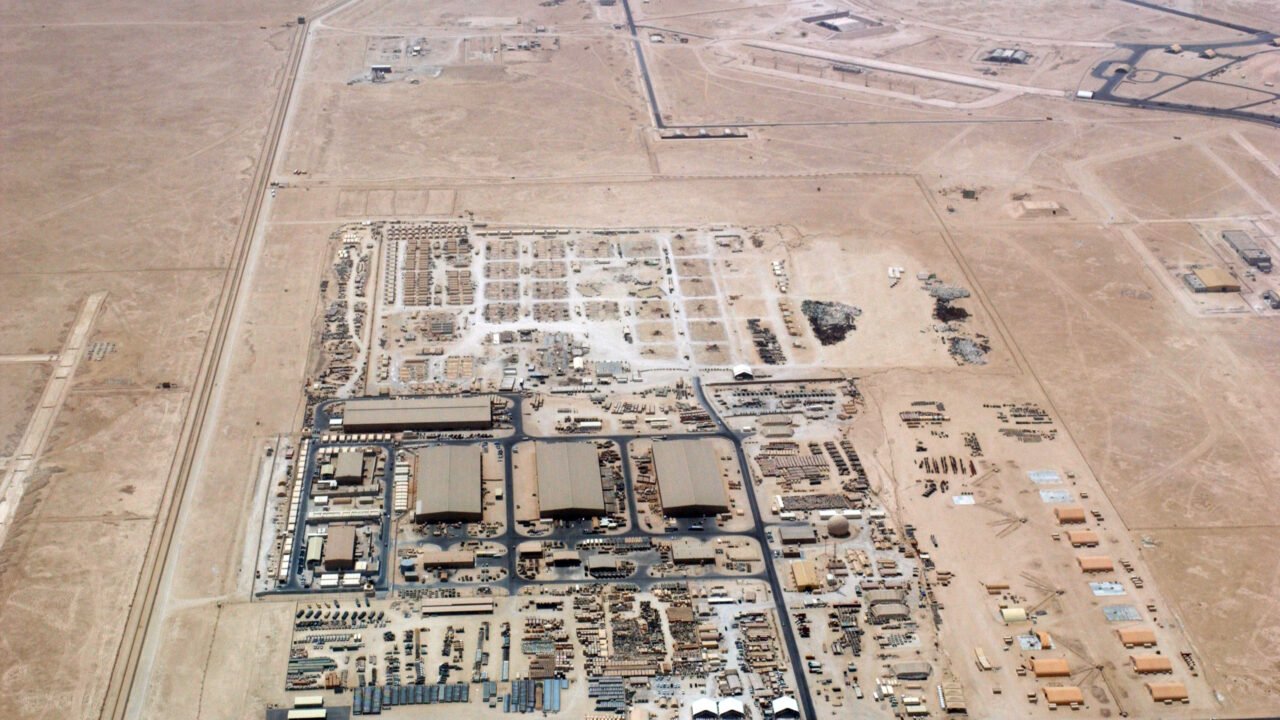
This is not, in truth, a new pattern. Iran struck Qatar’s Al Udeid air base in June 2025, during an earlier round of fighting with the US that was resolved by a ceasefire well before the war now underway began. It did not take long for the current war to repeat the pattern: on the very night it began, 28 February 2026, Iran fired dozens of missiles at Qatar alone, wounding sixteen people, while also striking bases in Bahrain, Kuwait and the UAE within hours of the initial Israeli-American assault. The throughline across both episodes is the same: Gulf states, and Saudi Arabia and Qatar in particular, keep finding themselves absorbing the consequences of disputes between Iran and others. What has changed this time is the frequency and breadth of the attacks. In the space of a single week, Iranian strikes or intercepted projectiles have been reported in Bahrain, Kuwait, Qatar, Oman, Jordan and the UAE — a simultaneous barrage that would have been almost unthinkable eighteen months ago, when Iran still had reason to fear provoking its neighbours into an anti-Tehran coalition.
Why Tehran is willing to burn its bridges
Iran’s calculus has shifted along with its leadership. The killing of the supreme leader, Ali Khamenei, in an Israeli and American strike in February, and the elevation of his son, Mojtaba, to the role, have left Tehran’s decision-making both more embittered and less predictable. A regime fighting for its survival, having lost its supreme leader and much of its senior military command over the preceding months, has little incentive to spare the sensitivities of Gulf monarchies that host the very bases from which American power projects into the region. Striking at Kuwaiti radar systems or Bahraini fuel tanks lets Iran claim it is retaliating against America without matching Washington’s ability to strike America directly. It is, in effect, asymmetric warfare conducted against America’s hosts rather than America itself.
The human cost, though smaller than in the war’s initial phase, is real and mounting. Qatar’s interior ministry has said that civilians, including a child, were wounded by falling shrapnel as air defences intercepted Iranian fire over Doha. Kuwait has reported border guards killed and dozens of soldiers and civilians wounded across successive waves of strikes, and an oil-rig worker was injured when a drone hit an offshore platform in its territorial waters. By early March, an AFP tally already put the Gulf states’ combined death toll at sixteen, eight of them civilians, and the count has continued to climb with each fresh exchange. Iranian strikes have also repeatedly hit merchant shipping rather than warships: a Cyprus-flagged container vessel lost a crew member after an engine-room strike, a Qatari LNG tanker was hit off Oman, and, in the attack that reopened this latest round of hostilities, two Emirati-owned oil tankers, the Mombasa and the Al Bahiyah, were struck by Iranian cruise missiles on Tuesday, killing an Indian sailor and wounding eight other crew, none of them military personnel. None of this is incidental collateral damage in the way a stray shell might be; Gulf and Emirati officials have been explicit that ordinary tankers, port workers and residents, not soldiers, are absorbing the weight of Iran’s retaliation.
For the Gulf states, the diplomatic response has been a study in careful fury. Qatar has condemned the strikes on Bahrain and Kuwait as blatant violations of sovereignty and breaches of international law. Saudi Arabia has denounced what it calls Iran’s repeated and destabilising aggression against its neighbours. The Gulf Cooperation Council has gone further, branding the attacks on Bahrain and Kuwait “repeated” and “heinous”. That framing has stuck: a regime unable to touch its principal antagonists is instead raining missiles on the one set of neighbours who had least to do with starting the fight. The United Nations Security Council, in a resolution proposed by the Arab Gulf states themselves back in March, demanded an end to Iranian attacks on Arab states and civilians. It passed 13 votes to none, with only Russia and China abstaining rather than exercising their veto, and drew a record 135 co-sponsoring states — a rare and simbolic display of Gulf unity against Tehran.
Yet none of the condemnations has gone so far as to sever the quiet diplomatic channels that still connect the Gulf to Tehran. Qatari and Pakistani officials have continued shuttling messages between Washington and Tehran even as Qatari airspace was, days earlier, absorbing Iranian shrapnel. The kingdom’s peculiar utility as both target and mediator says a great deal about how enmeshed Gulf diplomacy has become in this conflict: condemn by day, negotiate by night.
Why Israel, this time, is largely spared
Notably absent from the latest barrage is the country that started this war in the first place. Iran’s initial response to the joint Israeli and American attacks in late February included direct strikes on Tel Aviv and Haifa. This latest flare-up, by contrast, is overwhelmingly a dispute between Washington and Tehran over shipping in the Strait of Hormuz, and none of the reporting on the recent exchanges mentions a single Iranian strike on Israeli territory.
That pattern invites a few educated guesses. One is capacity: after months of Israeli and American bombardment, Iran’s arsenal is presumably a good deal thinner than it was in February, and what remains may simply be better rationed for cheap, nearby targets than for the longer, better-defended flight to Israeli cities. Another is cost: Israel’s air-defence network is widely reckoned to intercept a higher share of incoming fire than the batteries Gulf states rely on, which would make Israel a poor return on an increasingly scarce investment. A third is fear of retaliation in kind: when Iran struck Israel directly in February, the reply was devastating, costing Tehran its supreme leader and a swathe of its military establishment, whereas Gulf states, however furious, can only respond diplomatically. A fourth, more mundane explanation is that this month’s argument is with Washington over a shipping lane, not with Jerusalem, so Iran’s declared grievance points naturally at America’s regional hosts rather than at Israel. None of this need imply strategic restraint on Iran’s part; it looks rather more like a regime choosing the fights it can still afford to have, and leaving the expensive one alone for now.
The Gulf’s uncomfortable choice
None of this comes cheap, even setting the human cost aside. Brent crude rose by roughly 9.6% in a single session after the latest round of strikes, settling at $83.30 a barrel, its highest close in a month. Traffic through Hormuz, which carried well over 100 vessels a day before the war began, has repeatedly collapsed to a handful of tankers during the worst weeks of fighting, and shipowners are once again pausing transits and paying sharply higher war-risk premiums for the vessels still willing to make the run. Washington has also reimposed its naval blockade on shipping to and from Iranian ports, adding a second chokepoint to a waterway that barely needed one. But the more lasting damage is political rather than financial. Each round of Iranian strikes chips away at the credibility of the security guarantee Gulf states have leaned on for half a century.
The interception record has been a good one. Kuwait’s air defences brought down four missiles and ten drones in one recent barrage, and Jordan intercepted eight missiles aimed at its territory — but intercepting an attack and deterring one are different achievements, and a base that keeps absorbing fire, however successfully, is not obviously the same asset it was before the shooting started. Gulf governments have not said so publicly, but the calculation they are quietly running — how much protection these arrangements still buy, against how much exposure they now invite — is not hard to guess at.
Nobody, least of all the parties involved, appears to have a plan for ending this cleanly. Washington’s stated goal is to degrade Iran’s ability to threaten shipping and to force Tehran back to negotiations on terms it has twice now rejected. Iran’s evident strategy is to make the war expensive enough for everyone else that America’s regional partners eventually pressure Washington toward a settlement. That gamble depends on the Gulf states’ patience holding out longer than Iran’s missile stockpiles—a bet that looks, for now, uncomfortably close to even. In the meantime, the states least responsible for starting this war continue to absorb most of its collateral damage, a dynamic with an unhappy precedent in this region and no obvious expiry date.