

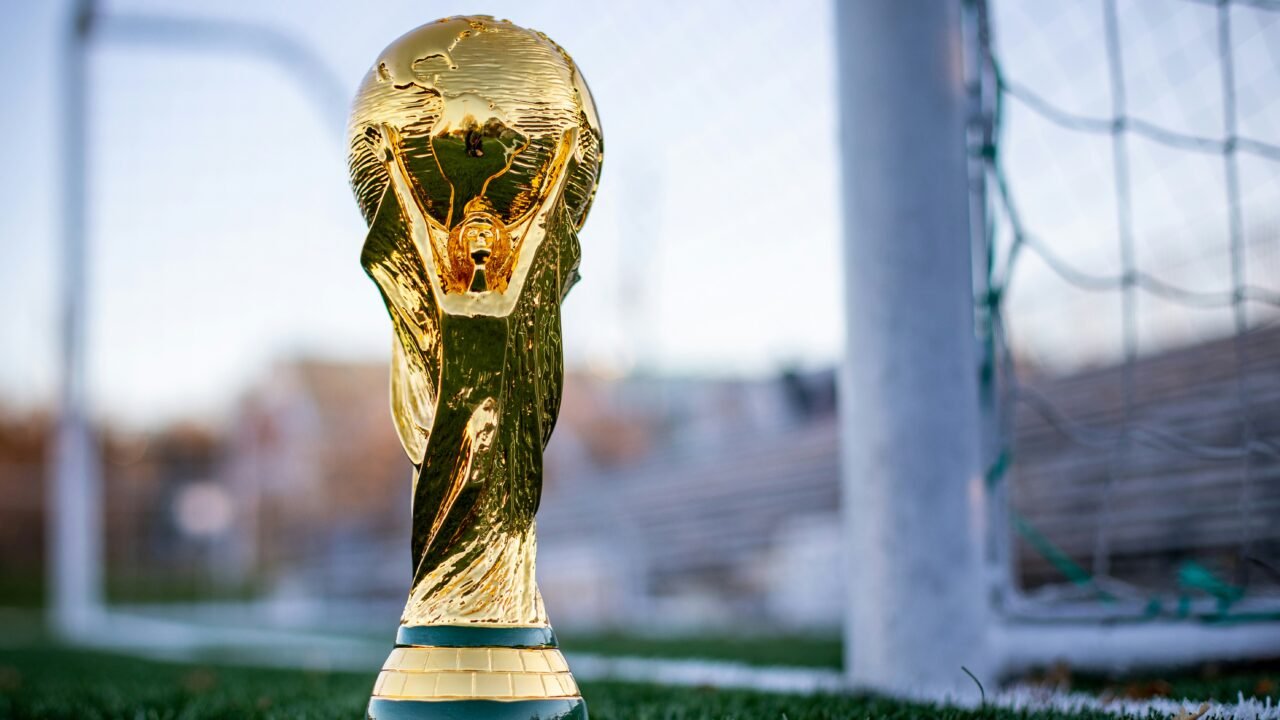
In 2026, for the first time the MENA region arrives as a substantial collective presence, spread across multiple groups and carrying realistic hopes of advancing deep into the tournament.
The 2026 FIFA World Cup kicks off today across three North American nations — and for the Middle East and North Africa, this is no ordinary tournament. A record eight Arab teams will compete, while Iran will also represent the wider MENA region, giving the region its largest-ever presence at football’s biggest event.
When Mexico faces South Africa in the opening match at the iconic Estadio Azteca, temporarily renamed Mexico City Stadium for this tournament, it will mark the beginning of what promises to be the most significant World Cup for the Arab world in the competition’s history. Running from 11 June to 19 July across the United States, Canada and Mexico, the tournament is the first to feature 48 teams and 104 matches.
Eight nations, one cup
Morocco enters the tournament carrying the highest expectations of any Arab nation. The Atlas Lions became the first Arab and African team to reach a World Cup semi-final in Qatar in 2022, a run that transformed perceptions of what teams from the region can achieve on the global stage. Morocco will face Brazil, Scotland and Haiti in Group C, beginning with a headline-grabbing clash against Brazil. Yet among Arab teams, Morocco is widely viewed as the side most capable of making a deep run into the knockout stages.
Egypt‘s return to the World Cup is defined by the presence of Mohamed Salah, one of the most recognisable footballers in the world and the most prominent Arab player of his generation. The Pharaohs have been drawn alongside Belgium, Iran and New Zealand in Group G. While Belgium will enter as favourites, Egypt views their grouping as a genuine opportunity to reach the knockout rounds for the first time in history. The meeting with Iran could prove decisive in determining which nation advances.
Two of the tournament’s most compelling stories come from Jordan and Iraq. Jordan has qualified for its first-ever World Cup and enters Group J alongside Argentina, Algeria, and Austria. Led by forward Mousa Al-Tamari, Jordan arrives in North America as one of the tournament’s most intriguing debutants. Iraq, meanwhile, returns to the World Cup for the first time since 1986. Drawn against France, Norway and Senegal, the Lions of Mesopotamia face a difficult challenge, but qualification alone represents a major achievement for Iraqi football.
Saudi Arabia arrives at its seventh World Cup and competes in one of the toughest groups in the tournament, alongside Spain, Uruguay and Cape Verde. Algeria returns after missing the previous World Cup and finds itself in a group featuring defending champions Argentina, Austria and fellow Arab team Jordan. Tunisia faces another difficult assignment against the Netherlands, Japan, and Sweden, while Qatar returns to the World Cup four years after hosting the tournament on home soil.
The geopolitics that came with the football
It is understandably hard to the controversy surrounding Iran’s participation in the 2026 World Cup given its role in MENA geopolitical tensions. The Islamic Republic qualified comfortably for the tournament, but preparations the team’s arrival in North America have been overshadowed by disputes over US visas and the broader ongoing tensions between Tehran and Washington.
While Iranian players ultimately received visas to enter the United States for their matches, several officials and members of the wider delegation have reportedly been denied entry or remain awaiting approval. Iranian authorities have accused Washington of politicising the tournament and violating the spirit of international sport, while US officials have cited security concerns and stressed that all players and essential staff were granted access a week ago.
The dispute has already affected Iran’s preparations. Originally planning to base themselves in Arizona, the team instead relocated its training camp to Tijuana, Mexico, where it will remain during the tournament. Reports indicate the squad may travel into the United States only for matchdays before returning to Mexico, an arrangement unlike that of most competing nations.
The episode serves as a reminder that football does not exist in isolation from international politics. As one of the few nations participating in the tournament while simultaneously facing profound diplomatic tensions with one of the host countries, Iran’s World Cup campaign will inevitably be watched through both sporting and geopolitical lenses.
Football and regional identity
The significance of this World Cup extends beyond results. In 2026, for the first time the MENA region arrives as a substantial collective presence, spread across multiple groups and carrying realistic hopes of advancing deep into the tournament.
The 2022 World Cup in Qatar represented a milestone as it brought the tournament to the Arab world for the first time. The 2026 World Cup represents a different, if not more impactful, milestone: the emergence of Arab football as a broader competitive force, reflected not only in the number of teams present but also in the growing quality and ambition of those sides.
Whether Morocco can again challenge the established powers, whether Salah can lead Egypt beyond the group stage, and whether debutants Jordan can produce a surprise will be among the defining stories of the next 39 days.