

Disarmament is not merely the collection of weapons, nor is reconstruction merely the rebuilding of houses.
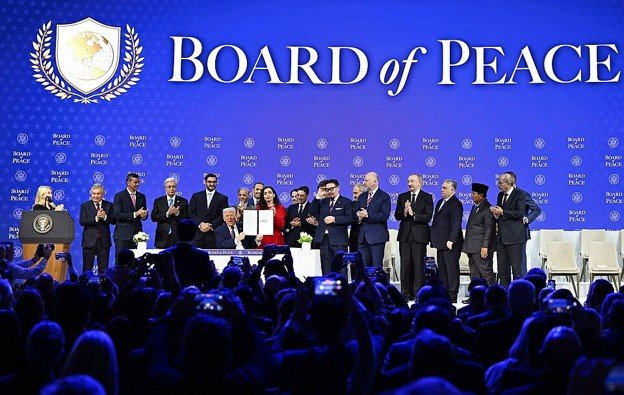
Recent reports of progress in negotiations over Gaza’s future have suggested a diplomatic breakthrough may be near. Under a roadmap issued by Donald Trump’s Board of Peace, Hamas and other armed groups would disarm and hand civilian and security authority to a transitional body, the National Committee for the Administration of Gaza. Hamas has formally accepted the Gaza disarmament agreement, while conditioning the surrender of its heavier weapons on a credible path to Palestinian statehood. It also appears to have softened its earlier demand that Israel first begin withdrawing from positions behind the so-called “yellow line”.
This would be significant. The sequencing of a Hamas disarmament agreement and a concurrent Israeli military withdrawal from the Gaza Strip has long been the central dispute: Hamas fears that giving up its weapons first would leave it defenceless and politically irrelevant, a fear not entirely unjustified; its own takeover of the Gaza Strip was carried out by violence. Israel counters that withdrawing while Hamas retains its military infrastructure would simply prepare the ground for another war.
But progress on this point should not be mistaken for a settlement. Gaza is not simply the site of a conflict between Israel and Hamas — it is an arena in which Palestinian factions, local clans, regional powers and international actors all pursue distinct interests, most of which the current agreement does not touch.
Everyday Gaza bears the burden
The immediate need is stark. Hundreds of thousands remain displaced in tents, shelters and overcrowded camps. Scorching summer heat and humidity have compounded the effects of an unreliable power supply, and high population density has enabled the spread of a chickenpox outbreak. Beyond food, water and medicine, Gaza needs hospitals, schools, public services and jobs. Reconstruction will take at least a decade and tens of billions of dollars — buildings, roads, electricity networks and water systems have been destroyed at scale, and money alone will not rebuild them without a political authority capable of maintaining order and administering aid.
That is the hardest question left unanswered: who governs Gaza once the war is formally over and a Hamas disarmament agreement is instituted? The Islamist organisation has controlled the territory since its 2007 takeover, and the enclave has been drawn into conflict with Israel roughly every three years since. The war that began on 7 October 2023 is the most destructive yet, and has still to produce a stable political outcome.
Hamas disarmament and its alternatives
The human cost has sharpened the debate over Hamas’s own record. Its embedding of military assets and command structures within civilian infrastructure has generated deep frustration among many residents, and reports that it may now disarm have intensified that anger — some Gazans have asked what years of sacrifice achieved if the outcome is simply the surrender of its weapons. Polling over the past year has consistently shown a majority of Gazans and West Bank Palestinians opposed to militia disarmament, though there are signs that acute daily hardship is beginning to soften that stance for some.
The dilemma cuts to the heart of Hamas’s legitimacy. It has long presented armed resistance as the core of Palestinian leverage and the foundation of its religious and nationalist claim to rule. Surrendering its weapons without a clear political gain in return risks undermining its entire rationale for existing.
There is already evidence of eroding support. A municipal election in central Gaza’s Deir al-Balah — the first vote held anywhere in the Strip in two decades — saw the Hamas-aligned list win just two of fifteen seats, with Fatah-backed candidates taking six. Even so, Hamas retains a base: many Gazans, particularly in refugee communities tracing their roots to present-day Israel, still identify with its narrative of armed struggle and historic grievance, while others stay tied to it through family, employment or distrust of both Israel and the Ramallah-based Palestinian Authority.
Gaza’s clans add a further layer of complexity. Some have formed their own armed groups hostile to Hamas, with Israel confirming it provides them support. They may weaken Hamas’s grip, but replacing one dominant faction with several local militias risks leaving Gaza fragmented rather than governed.
Muhammad Dahlan may also seek a role. The former Fatah security chief, exiled since Hamas’s 2007 takeover, has spent over a decade in the UAE as an adviser to President Mohammed bin Zayed, and Israeli officials have reportedly discussed his place in a future administration. He has repeatedly and publicly denied wanting a governing role. Whatever the truth of his ambitions, it remains unclear how much support he retains inside Gaza after twenty years away, how he would work with the Palestinian Authority, or whether residents would see him as a credible leader rather than a foreign-backed appointee.
Israel’s conundrum
Israel remains the most powerful actor on the ground, controlling the majority of the territory under the yellow line demarcation, and its leaders insist Hamas must be fully disarmed before any further military withdrawal. That position is unlikely to shift even if Prime Minister Benjamin Netanyahu is replaced at the ballot box in October: across Israel’s political spectrum, there is broad consensus that the group responsible for the deadliest single-day massacre of Jews since the Holocaust cannot be allowed to remain a threat.
Israel has reportedly considered storing rather than destroying collected weapons under the supervision of a future authority — a proposal that faces strong domestic opposition from critics who want the arsenal destroyed outright. Israel’s own definition of disarmament extends well beyond rockets and small arms to tunnels, weapons factories and any infrastructure that could rebuild Hamas’s military capacity. Even full compliance would not necessarily earn trust: many Israelis, particularly in the border communities devastated on 7 October, would remain wary of whatever Palestinian entity replaced Hamas.
This produces a genuine impasse. Gaza cannot recover while large parts of it sit under permanent military control or are excluded from reconstruction, but Israel is unlikely to withdraw further until convinced the territory no longer poses an organised military threat.
Divergent interests among outside actors
Egypt wants to prevent Gaza from becoming a source of instability or a channel to jihadist groups in Sinai, and is determined to stop any mass movement of Palestinians into its territory from becoming permanent — while its companies stand to profit from reconstruction contracts.
Turkey seeks influence through aid and reconstruction, which Israel and Egypt view warily as a bid for a political foothold amid broader regional suspicion of Ankara’s intensions. Qatar, its regional ally, is recalibrating its own role as a patron of Gaza’s welfare, mindful of scrutiny over past cash transfers to the territory that critics say helped fund Hamas ahead of 7 October. The UAE and Saudi Arabia want stability above all, and are willing to fund reconstruction if convinced it will counter radicalisation — ideally as a step toward Palestinian statehood, but at minimum to stop Gaza functioning as a trigger for recurring wars or a haven for Islamists.
The United States sees a durable ceasefire and reconstruction as central to regional stability: continued conflict damages relations with Arab governments, complicates Middle East diplomacy and strengthens Iran. The Trump administration hopes a stabilised Gaza can build momentum for further Abraham Accords normalisation and free Washington to focus on strategic competition with China in the Indo-Pacific.
An agreement, not yet a settlement
The current negotiations may resolve weapons, withdrawal and security arrangements. But the central questions remain open: who will govern the Gaza Strip and police it? What role will the Palestinian Authority play? How will Israel’s security demands be reconciled with the political and economic needs of Gaza’s population?
A Hamas disarmament agreement is not merely the collection of weapons, and reconstruction is not merely the rebuilding of houses. Both require a legitimate and effective political order — and that is precisely what the current agreement does not yet provide. It may be signed long before a genuine settlement exists. Progress on Hamas’s weapons matters, but it is only the beginning.