

Ceuta’s longer-term significance may lie less in the crisis itself than in what it hands to politicians and policymakers worldwide. Governments and parties already inclined toward migration curbs now have a vivid case study; those committed to more liberal entry policies face a harder story to sell to wary electorates.
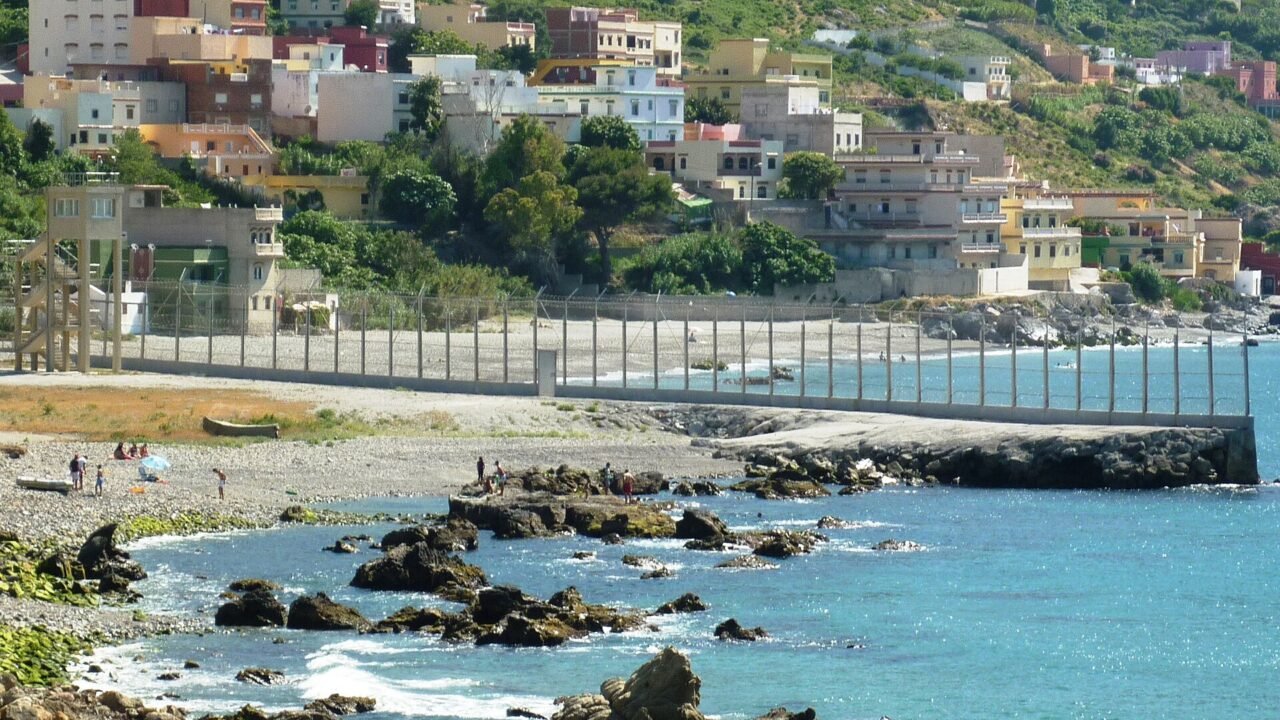
Ceuta is barely a dot on the map: a Spanish outpost clinging to Morocco’s coastline, smaller than most cities’ downtown districts. And yet, for the third time in a decade, Ceuta’s border with Morocco that hugs the strategic Strait of Gibraltar has managed to rattle capitals throughout Europe and beyond. On the night of 30 July the semi-enclave’s borders were simply overwhelmed. Within 48 hours, up to 60,000 people, most of them young men, swam round the breakwaters at Tarajal and Benzú or squeezed through gaps in the perimeter fence. Ceuta has a population of just 85,000; in two days it absorbed a crowd equivalent to two-thirds of that number. Pleading for help, the city’s mayor said it was as though a million people had arrived on mainland Spain in a single weekend.
At least 67 people died in the crossing, according to Spanish authorities — many drowned at sea, others crushed in stampedes at the breakwater. Search teams, still recovering bodies days later, warned that the toll could rise further — and that deaths on the Moroccan side of the border had yet to be counted at all. By the end of the day, most of the trespassers who had entered had already gone home, Spanish officials said, put off by a lack of food and shelter. Madrid responded by deploying soldiers to the territory and starting work on a new floating barrier at Tarajal.
Madrid’s own making?
Spain’s own policies greatly contributed to this crisis. In January the government pushed through a decree to regularise some 500,000 undocumented migrants already in the country; by July, applications had reached almost 1.2 million. Complicating manners, Spain’s Supreme Court had ruled that migrants intercepted while swimming into Ceuta or Melilla — the country’s other North African semi-enclave — could not be summarily returned without due process, since no official crossing point was involved. The government blamed traffickers for twisting this ruling into a rumour of amnesty. That may be true, as far as it goes. It does not go far enough. Gemma Pinyol-Jiménez, a migration researcher at Pompeu Fabra University, points out that the ruling merely streamlines police procedure; it grants nobody the right to stay.
Sceptics need only consult the historical record. This is not Ceuta’s first run-in with mass migration. In May 2021 Morocco eased its border controls and around 8,000 people, many of them unaccompanied minors, poured in over two days — after Spain had quietly hospitalised Brahim Ghali, leader of the Polisario Front, the Western Sahara independence movement Rabat treats as an enemy of the state. Morocco’s ambassador in Madrid threatened “more reprisals”. Pedro Sánchez, Spain’s socialist prime minister who often titled towards Morocco’s regional rival Algeria, countered that Rabat was “attacking the borders” over a policy disagreement. The crisis ended only when Spain abandoned decades of neutrality and endorsed Morocco’s autonomy plan for Western Sahara in 2022 — a concession that promptly froze relations with Algiers for four years.
What changed since 2021 is the trigger, or at least its plausible shape. Ten days before the crossing, Mr Sánchez was in Algiers, courting more Algerian gas through the Medgaz pipeline — Algeria already supplied roughly a third of Spain’s gas in the first half of 2026 — while pointedly declining to walk back Spain’s 2022 tilt toward Morocco on the Western Sahara file. To regional security analysts, the timing reads less like coincidence than a message: Madrid’s attempt to keep both Rabat and Algiers content carries a price, and Morocco can still impose punitive costs to express displeasure.
Schengen and stirred: every country for itself
Europe’s response laid bare the union’s fault lines rather than papering over them, with national self-interest crowding out anything resembling pan-European consensus. Ursula von der Leyen, the Commission president, called the scenes from Ceuta “unacceptable” and insisted the European Union could not allow anyone to enter its territory without abiding by its rules. Yet her expressed confidence that the bloc’s migration partnership with Rabat would eventually deliver results rang hollow: there is, in practice, no EU-level enforcement mechanism equipped to handle a crisis of this scale, and her statement amounted to little more than a plea for patience.
That vacuum was filled by unilateral action. Italy’s prime minister, Giorgia Meloni, declared her government ready to take extraordinary measures to defend its own borders, including suspending the Schengen arrangement with Spain — and briefly did so, reinstating checks on travellers from Spain for 30 days. She did not act alone. Finland’s interior minister, Mari Rantanen similarly argued that Madrid had “completely failed” to protect the bloc’s external border and that states unable to do so “cannot remain members” of the passport-free zone. Denmark’s Mette Frederiksen urged Brussels to “consider all options, including a suspension of Schengen cooperation”. Czechia’s Andrej Babiš joined the same call. What had begun as one government’s grievance was, within days, a growing coalition against Spain’s overly permissive migration policies.
Madrid did not absorb this quietly. Mr Sánchez — already facing declining popularity at home, a corruption conviction against his brother for nepotism, an ongoing corruption trial involving his wife and an election due next year — hit back with a league table of irregular EU entries since 2021, noting that Italy itself had recorded far more arrivals than Spain. He further accused unnamed EU counterparts of a response “driven by prejudice, fake news, ignorance or political interest”.
Uninvited guests, unsolicited opinions
The crisis drew responses from beyond Europe and Africa. US President Donald Trump called the crossings a “catastrophe” and an “invasion,” blaming Spain’s “weak” and “very liberal” laws, while the State Department tied the crisis to Sánchez’s migration-friendly policies — an unusual level of American engagement in what had, until then, been a European quarrel. Even Israel found a way into the row: Danny Danon, its UN ambassador, needled Spain for its repeated criticism of Israel’s wars in Gaza, Lebanon and elsewhere since the 7 October 2023 attacks, arguing it had no standing to “lecture Israel” so long as it maintained “colonial enclaves in Africa”.
The remark drew a pointed retort from Spain’s transport minister, Óscar Puente — no stranger to controversy over Israel, last summer having falsely described French Jewish teenagers as “Israeli brats” after they were removed from a flight — who wrote: “Well, things are starting to get pretty clear”, widely seen as implying that Israel and America had a hand in stoking events. Other Spanish commentators and public figures, including actor Javier Bardem, have endorsed speculation of Israel either being involved or standing to exploit, despite no evidence supporting these claims. It says more about Spain’s polarised politics and search for external culprits than about Ceuta.
Ceuta’s longer-term significance may lie less in the crisis itself than in what it hands to politicians and policymakers worldwide. Governments and parties already inclined toward migration curbs now have a vivid case study; those committed to more liberal entry policies face a harder story to sell to wary electorates. With elections looming in Spain, immigration already hardening as an issue elsewhere in Europe and border security a top priority for US voters in this autumn’s congressional mid-terms, images from Spain’s semi-enclave in the Strait of Gibraltar can be expected to outlast their news cycle at the ballot box. Whether the latest Ceuta incident produces durable policy change or simply another cycle of crisis and forgetting will depend less on the episode itself than on whether a comparable one follows before this one fades from memory.