


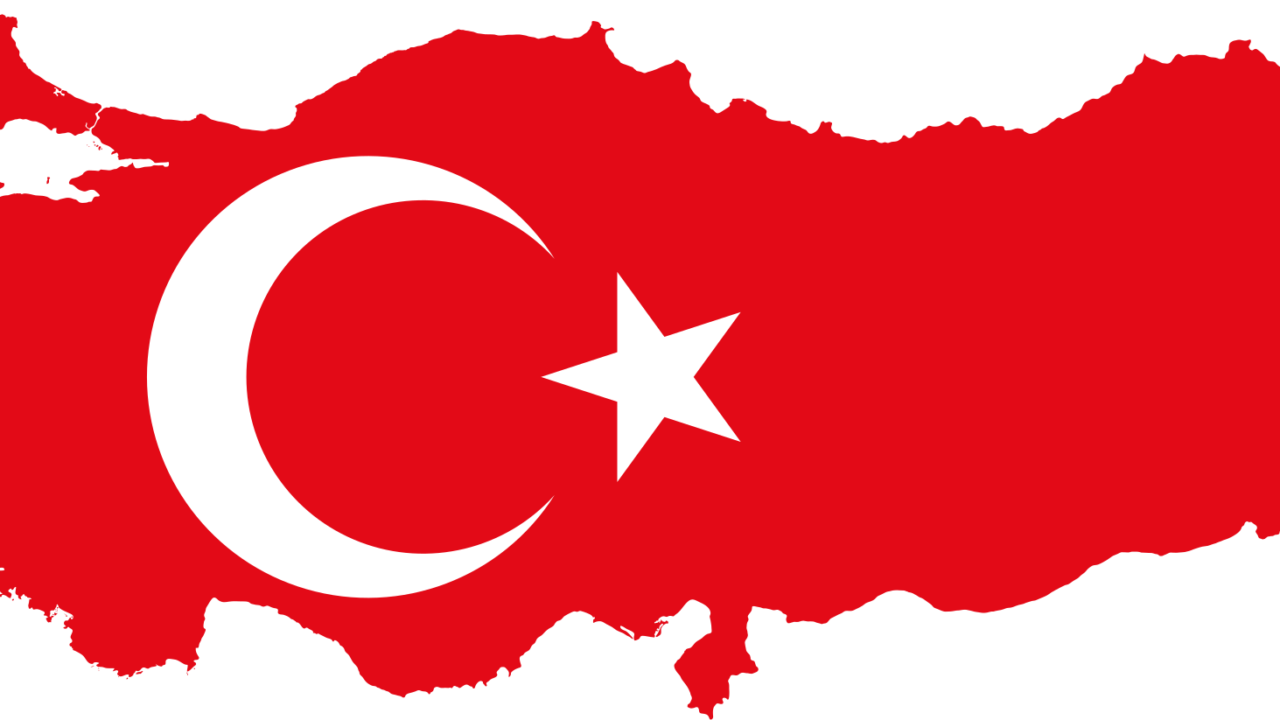
If American and Israeli pressure on Iran intensifies to the point of destabilising the Islamic Republic itself, Turkey may emerge as the single most influential power in the wider Middle East. In such a scenario, Ankara’s influence could extend far beyond economic or diplomatic leadership into something approaching regional predominance.
The regional war between Iran and the US–Israel alliance, for now supplanted by a fragile ceasefire, has created a new and pervasive ambiguity among all Middle Eastern actors. Once stringent alliances are now fluid, hitherto clear strategic intentions are increasingly obscured, and the balance of power appears ever more unsettled. Yet amid this regional volatility, one undeniable reality is uniformly clear: Iran’s regional proxies have been significantly weakened, with their deterrent capacity steadily eroding. Policymakers across the Levant and the Gulf are responding accordingly, recalibrating their regional calculations. In this reshuffling, all eyes are on Turkey, which stands to emerge as one of the principal beneficiaries of the new Middle Eastern order.
The Islamic Republic of Iran, despite sustained external pressure led by a punishing US blockade and mounting domestic economies woes, remains resilient for now. Far from retreating, Tehran continues to project military influence across the Gulf and its surrounding environs. Gulf Arab states, meanwhile, still find themselves operating largely in a defensive posture, seeking protection — whether through diplomacy, deterrence or foreign alliances — from the persistent threat posed by Iranian missiles, proxies and maritime capabilities.
America’s priorities, however, remain narrower than many Gulf capitals might wish. Washington continues to frame its engagement with Tehran primarily through the prism of Iran’s nuclear programme. The dialogue between the two adversaries, whether direct or indirect, has focused overwhelmingly on uranium enrichment, inspections and strategic containment. Comparatively little attention has been devoted to the broader anxieties of Gulf states, whose concerns extend well beyond the nuclear file to encompass regional militias, missile arsenals and the long-term reliability of American protection.
Israel, by contrast, remains the only regional actor whose intentions are comparatively transparent. Since the events of 7 October and the subsequent escalation across several fronts, Israel has pursued a clear strategic objective: the destruction or severe degradation of Hamas and Hezbollah as organised military forces, alongside a broader effort to curtail Iran’s nuclear and ballistic-missile capabilities and to weaken Tehran’s network of armed allies across the region. Israel regards these groups not merely as ideological adversaries but as immediate existential threats positioned along its borders and within striking distance of its population centers.
Yet even Israel’s freedom of action is limited. Its military campaigns continue to operate within boundaries shaped, to a considerable extent, by decisions made in Washington. American support remains indispensable, but so too do American restraints. Israeli leaders therefore find themselves balancing operational ambition with the political realities of dependence on their principal patron.
It is against this backdrop of strategic uncertainty that Turkey has adopted what might best be described as the posture of an active spectator. Ankara is not merely observing events from the sidelines; it is patiently positioning itself to profit from whichever direction the regional order ultimately takes. This approach has been tested by repeated violations of Turkish southeastern airspace from Iranian ballistic missile launches, incidents that have proven more irritating than deceive, particularly given the effectiveness of NATO air and missile defence systems in intercepting them. Rather than retaliate against Tehran, Ankara has exercised calculated patience, pursuing a long-term accumulation of geopolitical, economic and security leverage to be deployed at times and places of its own choosing.
Should the United States gradually reduce its military and political commitment to the Gulf — perhaps in exchange for some form of accommodation with Iran over the nuclear issue — the Gulf monarchies may find themselves compelled to look increasingly towards Ankara as a counterweight to Iranian power. Turkey’s sizeable military, advanced defence industry and growing diplomatic clout would make it an attractive, if imperfect, partner for anxious Arab states seeking alternatives to a less dependable America.
Conversely, if American and Israeli pressure on Iran intensifies to the point of destabilising the Islamic Republic itself, Turkey may emerge as the single most influential power in the wider Middle East. Unlike Iran, it possesses a relatively diversified economy, competent state institutions, a NATO-trained military and enduring historical and cultural ties across the former Ottoman sphere. In such a scenario, Ankara’s influence could extend far beyond economic or diplomatic leadership into something approaching regional predominance.
In both outcomes, Turkey could strengthen into hegemonic force capable of exerting considerable political pressure on its Arab neighbours. In many Arab capitals, the prospect of Iranian domination is deeply unsettling; yet the return of overwhelming Turkish influence may prove equally, if not more, concerning. Historical memories of centuries of Ottoman rule and Ankara’s increasingly assertive foreign policy over the past decade have left an indelible mark. Arab rulers nervously look at Turkey’s ongoing military presence in northern Syria and northern Iraq, its support for Sunni Islamist movements in their own backyard and its establishment of military bases and training missions in several African countries, fearing encirclement and eventual submission to a neo-Ottoman sphere of influence.
This raises a crucial question: how might Israel respond to a more dominant Turkey, and how could relations evolve between Israel and both Turkey and the Arab world under these emerging conditions? Any answer necessarily remains speculative. Much will depend on the future policies of both Turkey and Israel, as well as the trajectory of American engagement in the region. So far, however, the conduct of both countries has been marked by a notable degree of caution despite their openly conflicting rhetoric. Israel has little interest in expanding the circle of hostile forces confronting it, while Turkey appears equally reluctant to escalate tensions with Israel into direct military confrontation — particularly after Israel demonstrated significant military and intelligence capabilities during its confrontation with Iran and its once-formidable regional allies.
Indeed, senior Turkish officials themselves have acknowledged the realities of this balance of power. Hakan Fidan, Turkey’s foreign minister and widely considered the key architect of its emerging grand strategy, offered an unusually candid assessment of modern strategic competition. In an interview with Turkish state television on 4 March, Fidan bluntly stated: “If you do not enhance your capabilities in cyber intelligence, signals intelligence, electronic intelligence, preventive intelligence, aerial surveillance and satellite imagery — you should not even enter into verbal spat with Israel or America.”
With the Iran–US face-off at a seeming impasse, Turkey senses its moment of ascendency on the regional stage. Amid a perceived leadership vacuum, Ankara appears increasingly confident in its ability to project military strength and political influence across the Arab and wider Muslim world, reflecting long-standing aspirations for a “Turkish Century“. Yet its reception in the region will be shaped by its behaviour, both in action and in tone. Policies perceived by Arab states and Israel as non-threatening are likely to encourage accommodation and cooperation. Slowly but surely, Ankara could consolidate regional influence, outmanoeuvre rivals and define new strategic realities on the path to greater regional predominance.
However, Turkish actions perceived as aggressive, expansionist or destabilising could trigger a backlash, including the formation of unexpected alignments among regional players. Over the past decade, Israel and several Arab states have quietly converged in opposition to a shared Iranian threat, despite a lack of formal recognition in many cases. Shared religion has not prevented cooperation against Tehran, suggesting that pragmatism can override ideological divides. A similarly aggressive Turkey, if seen as seeking coercive regional hegemony, could provoke comparable counterbalancing dynamics.
With the region in transition, Turkey understands that few outcomes are predetermined and is therefore likely to proceed cautiously in leveraging its growing geopolitical capital. How it translates this advantage into relations with its southern and eastern neighbours will shape its destiny — or seal its fate.