

A review of Sunni discourses over the course of the month and a half of fighting reveals that critical attitudes towards Iran outweighed sympathetic ones, even as some of the critics condemned Israel and/or the US in the same breath.
The war between Iran, the United States and Israel saw reluctant neighbouring nations pulled into a war they had little desire to join. What could have been a limited conflict spiralled into a multi-front war, with Iran launching over 5,750 drone and missile attacks across the Gulf region, including frequent targeting of civilian infrastructure. Images of devastation in Dubai’s iconic skyscrapers, Kuwait’s airport and Saudi Arabia‘s largest industrial complex blunted Tehran’s perennial narrative of its principled defense of Islam against its enemies.
Rather than leveraging the US–Israeli attack as a rallying cry for pan-Islamic solidarity, Tehran’s unprovoked strikes on its mostly Sunni-majority Arab neighbours across the waterway — including Iran-friendly Qatar and Oman — reinforced fears of its sectarian agenda within the region. For many in the wider Muslim world, where Sunnis form an 85% majority, this served to vindicate long-held fears of Tehran’s expansionist aims.
A review of Sunni discourses over the course of the month and a half of fighting reveals that critical attitudes towards Iran outweighed sympathetic ones, even as some of the critics condemned Israel and/or the US in the same breath. Anti-Iran sentiments were particularly pronounced among Sunni leadership centres in areas closer to the conflict zone and more directly affected by Iranian actions, suggesting that the revolutionary Shia theocracy was perceived as a greater threat to the region than its non-Muslim adversaries. In contrast, a minority Sunni opinion offering unwavering support for Iran, and often indifferent to its aggression against neighbouring states, was more prevalent in regions farther from the front lines.
Legacy Sunni institutions emphasise Iranian culpability
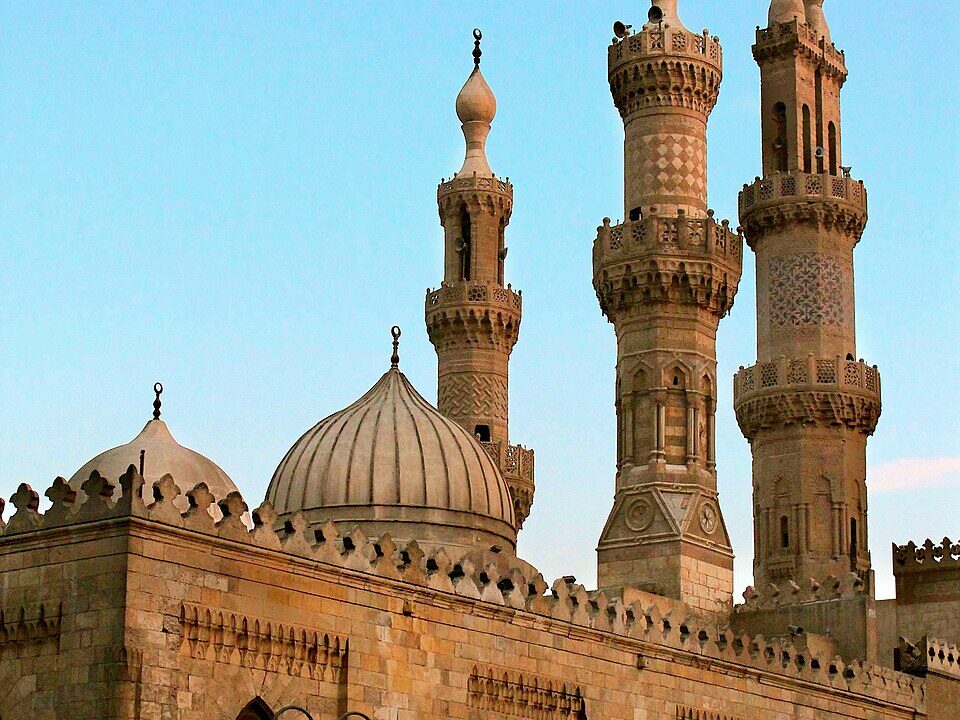
Al-Azhar University in Cairo, the preeminent Sunni institution of learning for hundreds of years, was among the first to voice opposition to Iran’s wartime conduct. Its first statement, issued on 3 March, refrained from naming any country but condemned actions violating the sovereignty of Arab states and “terrorising their populations”. Al-Azhar’s Grand Imam, Sheikh Ahmed El-Tayyeb, reiterated this condemnation in a solidarity call with UAE President Sheikh Mohamed bin Zayed, labelling Iran’s “blatant attacks” on Gulf countries as violations of the principle of peaceful neighbourliness.
The Cairo institution issued an even harsher condemnation of Iran on 17 March. The statement explicitly mentioned Iran, blaming it for “unjustified attacks” not only on Gulf countries but also Jordan, Turkey, Iraq and Azerbaijan, all of whom “were never part of any conflict”. It described the victims of Iranian attacks in those countries as “martyrs”. Al-Azhar characterised Iran’s strikes on civilian targets as gross violations of cardinal Islamic values to preserve human life and protect property, while calling on the Islamic Republic to cease attacks in the spirit of adherence to Islam and Sharia law. Grand Imam Al-Tayeb took to social media in a slightly more moderating tone to welcome the 8 April ceasefire of the “war against Iran”, but simultaneously demanded that Iran cease attacks on Gulf states, once again avoiding mention of the US or Israel.
The Mecca-based Muslim World League (MWL), an organisation closely aligned with Saudi Arabia’s Sunni interpretation of Islam, has likewise been vociferous in condemning Iran’s actions. In two statements on the war’s first day, the MWL condemned Iran’s attacks on Gulf Arab nations and specifically on Saudi Arabia, characterising them as “aggression” and “treacherous”. Over the following weeks, the MWL issued multiple statements denouncing Iran’s strikes, particularly their indiscriminate nature and their harm to civilians.
On 25 March, the MWL reported that numerous Muslim scholars from around the world had shared with it unequivocal condemnations of Iran’s actions for undermining the unity of the global Muslim community (ummah) and warned that it would face isolation. A press release by MWL Secretary-General Dr. Mohammed bin Abdulkarim Al-Issa regarding the 8 April ceasefire placed the responsibility for maintaining peace squarely on Iran. MWL’s statements have been notable for their absence of criticism of Israel or the United States in relation to the war, focusing instead on Iran’s violations of Islamic principles. The only backlash against Israel concerned its closure of Jerusalem holy sites, though without mentioning its connection to the war.
Mainstream Islamists calibrate Iran criticism with denunciations of Israel and the US
Sunni Islamist groups, which are typically less inclined to denounce Iran, especially when it is at war with common non-Muslim foes, have nonetheless disavowed from Iran’s recent actions. One of these is the Qatar-based International Union of Muslim Scholars (IUMS), which counts over 100,000 members and was founded by the prominent Sunni scholar and jurist Yusuf Al-Qaradawi, perhaps the most influential Sunni thinker in the past half century. Although the IUMS issued only a handful of statements on the war, they prioritised condemning Iran’s attacks on fellow Muslim nations. Its first statement on 3 March denounced the US–Israeli strikes, but later remarks increasingly criticised Iran for its assaults against neutral Arab countries. IUMS Secretary-General Ali Al-Qaradaghi subsequently criticised Iran for violating Sharia law by attacking Muslim countries not involved in the conflict. He explained that these countries had a religious obligation to defend themselves, which he defined as jihad, framing Iranian actions as a sectarian conflict that only advanced the hostile interests of non-Muslim powers.
Similarly, key branches of the transnational Muslim Brotherhood — historically a key supporter of Iran, rallying behind it in the June 2025 war with Israel — expressed concern over Tehran’s conduct as the war progressed. The most influential wing, the Egyptian-origin faction headed by acting Supreme Guide Saleh Al-Haq from exile in Turkey, released a statement on 28 February that prioritised criticism of Israeli and American actions, but also faulted Iran for its “deviation from the right compass” in targeting uninvolved Arab countries. Subsequent statements on 8 March and 15 March dismissed Iran’s claims that targeting Gulf installations is justified because they serve the US military.
The Syrian branch‘s spokesman, Sa’ad al-Khatib, described the war as a battle between two evil forces — Israel and Iran — both of which have harmed the Arab and Muslim ummah and seek imperial domination in the Middle East. While expressing a desire for Syrian neutrality, he also provided religious justification for celebrating Ali Khamenei’s death, despite Israel’s role in it, due to the former supreme leader’s involvement in the deaths of “more than a million martyrs” in Syria. Echoing this dual condemnation, Morocco’s opposition Islamic Party of Justice and Development (PJD), which is informally linked to the Brotherhood, condemned both Iran’s attacks on Gulf neighbours and the Israeli–American strikes on Iran. Even Hamas, the Palestinian offshoot of the Brotherhood and a longtime client of Iran, aligned with its parent group’s messaging, issuing an uncharacteristic appeal to Tehran to cease attacks on neighbours.
In fact, the only statement of unwavering Brotherhood support has come from a loosely affiliated member of the Sudan wing. Within the first week of the conflict, Islamist militia leader Naji Abdullah, whose forces were reportedly supplied with Iranian arms through their proxy relationship with the Tehran-backed Sudanese Armed Forces (SAF) in the country’s civil war, called for full solidarity with Iran and offered to deploy fighters in response to any potential American ground invasion. The SAF quickly repudiated Abdullah’s pledge and arrested him.
The outliers supporting Iran: pan-Muslim solidarity above all
Despite the overwhelming criticism from Sunni institutions, a small but vocal minority of Sunni scholars and groups maintained unconditional support for Iran, guided by the principle of pan-Islamic solidarity against outside forces. This stance was most strongly displayed in North Africa. In the war’s first week, 26 Sunni theologians, academics, and political activists — the majority of whom hailed from Morocco, Algeria and Libya — published a joint declaration backing Iran’s actions and accusing the US of exploiting the Gulf as a base for anti-Iran aggression. Employing language reminiscent of Al-Qaeda in the early 2000s, the scholars framed the conflict as a “Crusader–Zionist” conspiracy and called on Sunnis to unite with Iran, despite past disagreements over Tehran’s regional policies.
A key signatory of the declaration was Libya’s Grand Mufti Sadiq Al-Ghariani, representing the Tripoli-based Government of National Unity in that divided country. Al-Ghariani elaborated his stance several weeks later, arguing that unequivocal support of Iran is a binding religious imperative on all Muslims and doubling down in his belief that foreign military presences in Arab countries are to blame for instability. Morocco’s largest Islamist social movement, Al-Adl wal Ihsane, also rallied behind the Islamic Republic while avoiding mention of Tehran’s actions toward Sunni non-belligerents.
Two additional centres of gravity for pro-Iranian stances have been Muslim communal leadership in Indonesia and India. In Indonesia, the Indonesian Ulema Council, the main clerical body in the world’s most populous Muslim country, met with Iran’s ambassador in early March to express solidarity and support any coordinated global campaign of anti-war protests. The Council also employed local anti-war sentiment to pressure Jakarta to withdraw from the Trump administration’s Gaza plan, which has been unpopular domestically. Similarly, Nahdlatul Ulama, a leading social movement, lobbied the government to leverage its strong relationship with the US to end the war.
In India, the Sunni-majority Jamaat-e-Islami Hind (JIH), representing a significant portion of the 200-million Muslim population, issued statements condemning the US–Israeli attacks and eulogising Khamenei’s “martyrdom“. Though it briefly mentioned Iranian aggression, JIH focused blame on Arab nations, accusing them of hosting facilities to enable US aggression against Iran. The Indian Muslim body’s ceasefire statement called on Iran’s opponents to avoid escalating the conflict, without addressing Iran’s own attacks.
Reinforcing the Sunni apprehension of Iran
The Sunni Muslim world’s intellectual divisions since the start of the Iran war mark the latest chapter in the long-standing unease over Iran’s role in the Middle East. The late Al-Qaradawi dedicated the final 15 years of his life to warning against Iran‘s expansionist ambitions and its efforts to spread Shiism across Sunni-majority Arab countries. Despite his unwavering opposition to the United States and Israel, Al-Qaradawi, in his later years, came to view Iran as an even greater threat. He accused the Islamic Republic of pursuing a long-term agenda to replace Sunni Islam with its revolutionary Shia doctrine in the Arab heartland. Although initially dismissed by some as alarmist and polemical, his concerns now appear prescient.
Iran’s indiscriminate attacks on neutral Sunni Arab states, especially those seeking to avoid involvement, have been seen as a grave breach of Islamic unity. While some Sunni voices offered support, they have remained marginal and distant from the war’s immediate impact. Credible figures, particularly in the Arab heartland most affected by Iran’s assault, have increasingly distanced themselves from Tehran. Iran’s actions are viewed as an unforgivable betrayal of fellow Muslims, regardless of criticisms directed at its non-Muslim adversaries. Whether or not the war continues, the damage is done. Growing anti-Iran sentiment is likely to have lasting consequences, hindering Tehran’s efforts to rebuild trust and assert a unifying role within the ummah.