

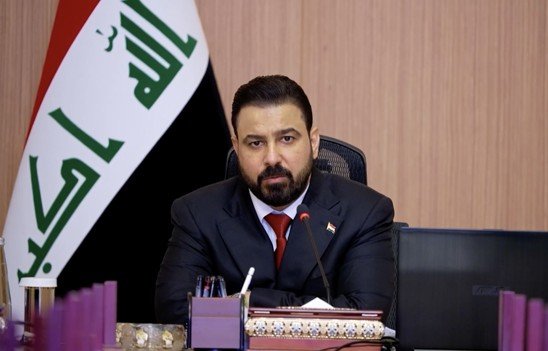
In personally overseeing the campaign, the young premier aims to solidify the rule of law within clearly defined national interests and dismantle the zero-sum sectarian order that has taken root since 2003. The operation represents one component of a longer-term vision: asserting national sovereignty and decoupling from Iranian influence.
As daylight broke over Baghdad on a Sunday in late June, elite security forces descended on the heavily fortified Green Zone, home to Iraq’s main government complexes and foreign embassies. Iraq watchers instinctively assessed that the Counter-Terrorism Service was being deployed to disrupt a new terrorist plot, one of countless attempts to destabilise the country since Saddam Hussein’s deposal in 2003. But observers would quickly discover that the government’s best military units were being sent on anything but a conventional security mission. Rather, they were engaging in Iraq’s largest anti-corruption campaign in two decades of post-Saddam rule. They moved quickly to arrest officials – some of them at the highest levels — accused of corruption and confiscate their illicit assets. For an Iraqi defence establishment still struggling to assert internal control amid sectarianism and foreign meddling, corruption is deemed “as dangerous to the country as terrorism”, hence the decision to mobilise the country’s most capable troops to fight it.
Beyond these tactical aims, the ongoing Operation Dawn serves the broader strategic goals of newly appointed Prime Minister Ali Zaidi, a 40-year-old millionaire businessman with no prior political experience. In personally overseeing the campaign, the young premier aims to solidify the rule of law within clearly defined national interests and dismantle the zero-sum sectarian order that has taken root since 2003. The operation represents one component of a longer-term vision: asserting national sovereignty and decoupling from Iranian influence, including weakening Tehran’s matrix of control through sympathetic lawmakers, proxy militias, economic dependency and other levers.
How deep does the rot go?
According to the state news agency INA, the opening sweep led to the arrest of 47 suspects, including deputy ministers, parliamentarians and senior bureaucrats. Eleven days into the operation, authorities have retrieved more than $250 million in real estate, vehicles, gold and other assets — $120 million of which in banknotes alone. A key legal adviser to the prime minister estimates that upwards of $2 trillion in public funds have been diverted through corruption since 2003, suggesting that the past week and a half marks merely the beginning of a far wider operation. Initial reports estimated 200 suspects were being targeted in the operation’s opening phase. But the list has likely widened, owing to former Deputy Oil Minister Adnan Al-Jumaili, whose testimony since his arrest has implicated new individuals.
Several raids on officials’ homes uncovered eye-watering stashes of money and high-priced valuables, findings that illustrated an apathetic disconnect between Iraq’s public servants and the citizens they purport to represent. In a raid on the home of thirty-something parliamentarian Hind Al-Abbasi that went viral, investigators seized $57 million in cash, 27 kilograms of gold and even gold-plated lingerie. At Al-Jumaili’s residence, they found roughly $20 million hidden in water bottles, while $15.5 million was recovered from veteran lawmaker Alia Nassif. Some detained officials were found to own more than 50 properties registered under their own names or those of family members.
Perhaps signalling his non-sectarian and nationally unifying intent, Al-Zaidi’s campaign has gone after Sunni and Shia figures alike, rather than confining itself to the patronage networks of his predecessor, Mohammad Al-Sudani — a departure from the precedent set by previous incoming prime ministers’ low-scale corruption probes. Among the more notable “catches” were Ali Maarij Al-Bahadly, a pro-Tehran deputy minister accused of smuggling petroleum to Iran, and Muthana Al-Samaries, head of a leading Sunni political bloc. Central government officials have also praised the Kurdistan Regional Government for its cooperation in returning suspects who fled to the semi-autonomous region.
Al-Zaidi has shown no sign of slowing the campaign. He has deployed social media to update the public on asset-recovery progress and offered citizens financial rewards for information leading to the recovery of laundered funds, with a dedicated online reporting platform due to launch soon.
Al-Zaidi’s uphill domestic battle
The upstart prime minister, who ran on a technocratic, pro-accountability platform, has received strong — though not unwavering — political backing. Parliament has agreed to lift immunity for lawmakers suspected of wrongdoing, already allowing the arrest of several. Yet Al-Zaidi has trodded carefully around Iran-aligned armed factions, which field close to a quarter of a million men and often outmatch the state’s own military capabilities. When the ruling Shia-led Coordination Framework coalition met with Al-Zaidi after the initial sweep, it publicly backed the anti-graft drive but pointedly withheld authorisation to extend the campaign to figures embedded within these factions — a reluctance reportedly driven by fears that pursuing faction-linked financial networks could trigger a security backlash.
Several coalition leaders have also privately urged caution despite their public statements of support, wary that a widening dragnet might eventually reach their own affiliates. Sunni political forces, convening separately in Baghdad, issued a statement insisting that Iraq’s anti-corruption campaign be applied “without exception or discrimination”. Sustaining support across demographic and political divides will be crucial if the campaign is to avoid being cast as a political vendetta.
Scepticism is warranted. Previous anti-graft initiatives have produced more bark than bite, and this record counsels modest expectations for Operation Dawn. Iraq’s notorious 2022 “Heist of the Century“, in which roughly $2.5 billion was siphoned from the tax authority under the government of Mustafa Al-Kadhimi, saw only a fraction of the stolen funds recovered, with key suspects fleeing the country. Prime Minister Haider Al-Abadi’s establishment of a special anti-corruption commission following the 2015 anti-government protests was similarly seen as a cosmetic measure that treated symptoms while leaving the root cause untouched. Against this backdrop, Iraq ranked a dismal 136th out of 182 countries in Transparency International’s 2025 Corruption Perceptions Index, damaging its international standing and deterring foreign investment.
This history looms over Operation Dawn. For Iraq’s anti-corruption campaign to succeed where its predecessors failed, Al-Zaidi will need to drive structural reforms that dismantle a spoils system built on ethnic and sectarian affiliation and replace it with merit-based advancement and transparency. Reports suggest that some implicated parties are already offering negotiated settlements — returning embezzled funds in exchange for immunity from prosecution — a tempting compromise that will test the prime minister’s resolve to enforce a unified national order without exemptions for political allies.
One authority for all
Al-Zaidi launched Operation Dawn to complement his first signature initiative upon coming to power: ordering all pro-Iran armed groups to submit to state control. Previous governments had tried and failed to curb the power of the Tehran-backed actors, whose support was instrumental in suppressing the ISIS insurgency in 2014.
That said, circumstances in 2026 may favour Baghdad more than in years past. The Trump administration, which suspended the transfer of oil revenues and security funding to Iraq as a pressure tool to push Baghdad away from Tehran, embraced Al-Zaidi as a capable reformist, lending its geopolitical weight to help secure his election over pro-Iran rival Nouri Al-Maliki. With Iraq’s oil exports having contracted by more than 80% since the closure of the Strait of Hormuz, alignment with Washington has become vital to attracting foreign infusions of cash and know-how.
Iran, meanwhile, is considerably weaker following two wars against the US and Israel, the degradation of its proxy networks — particularly Hezbollah in Lebanon — and the loss of its Assad ally in Syria. The second of these wars drew in several Iraqi militias and prompted US and Israeli airstrikes on Iraqi soil, underscoring the risks that continued extra-state militia activity poses to Iraqi sovereignty, particularly given the plausibility of renewed conflict with Iran.
Within the Shia constituency, Al-Zaidi may have found an unlikely ally: the prominent cleric and political leader Muqtada Al-Sadr. A vocal supporter of Operation Dawn, Al-Sadr announced two months earlier that he would disband his Saraya Al-Salam militia and integrate its members into the national security forces — a striking shift given his long-standing defence of armed groups’ right to operate outside state control and his consistently militant anti-American stance. His move increases pressure on Iran-aligned factions to relinquish their autonomy, with Asaib Ahl Al-Haq already voicing support for eventual integration into the state apparatus. Other Tehran-aligned players, however — notably Kataib Hezbollah and Harakat Al-Nujaba — have so far refused to integrate their personnel, highlighting that Al-Zaidi’s objective faces a bumpy road ahead.
The depth of Iran’s entanglement in Iraq was on poignant display just this week: Ali Khamenei’s funeral procession, passed through the Shia holy cities of Najaf and Karbala, drawing mass crowds and prompting Baghdad to declare a public holiday. That the mourning of a foreign supreme leader could command such state-level accommodation on Iraqi soil — even as his regional network reels from geostrategic setbacks — underscores the formidable obstacles still facing Al-Zaidi’s sovereignty project.
Which way, Baghdad?
Operation Dawn is both a conventional anti-corruption campaign and a test of state sovereignty. Its promising early results — dozens of arrests, hundreds of millions in recovered assets, a rare display of cross-sectarian targeting and maneuverable political support — indicate a good-faith effort to weaken the opaque patronage politics that have defined Iraq since 2003. Yet the campaign’s ultimate significance will not be measured by the value of gold seized from a lawmaker’s villa, but by whether Al-Zaidi can convert early momentum into durable institutional reform. Such far-reaching change will also test whether the Iraqi premier can navigate policy vis-à-vis the armed factions, given that his government still depends on their cooperation, or at least their restraint.
The coming months could be decisive. Al-Zaidi’s ability to extend Iraq’s anti-corruption campaign into Iran-aligned networks, resist broad negotiated settlements that trade impunity for recovered funds and sustain political support across Iraq’s still-potent sectarian divide will determine whether Operation Dawn marks the dawn of a new era or becomes another unsuccessful accountability drive that promised much and delivered little. What is clear is that the campaign is inseparable from Al-Zaidi’s wider project of reasserting state sovereignty, particularly through the disbanding of Tehran-aligned militias. For a nation still defining what its post-occupation identity, Operation Dawn could prove to be a defining test of whether Baghdad can govern on its own terms.