
The issue of the US-Iran agreement reflects a deeper struggle over the Islamic Republic’s identity, the balance of power between its various blocs and the question of who will dictate its path in the post-Ali Khamenei era.
This week, the Pakistani meditator reported that the United States and Iran reached an agreement on the text of a memorandum of understanding, which is set to be signed in the coming days.
Progress on a US-Iran deal is reigniting internal divisions at the heart of the Islamic Republic regime. While Iranian President Masoud Pezeshkian and Speaker of Parliament Mohammad Bagher Ghalibaf support the signing of the agreement and see it as an opportunity to alleviate the regime’s economic woes and international isolation, opposition is growing from ideological elements identified with the ultra- conservative camp. These cracks within the hardline elements on which the regime relies could prove to be the most significant threat to its internal stability.
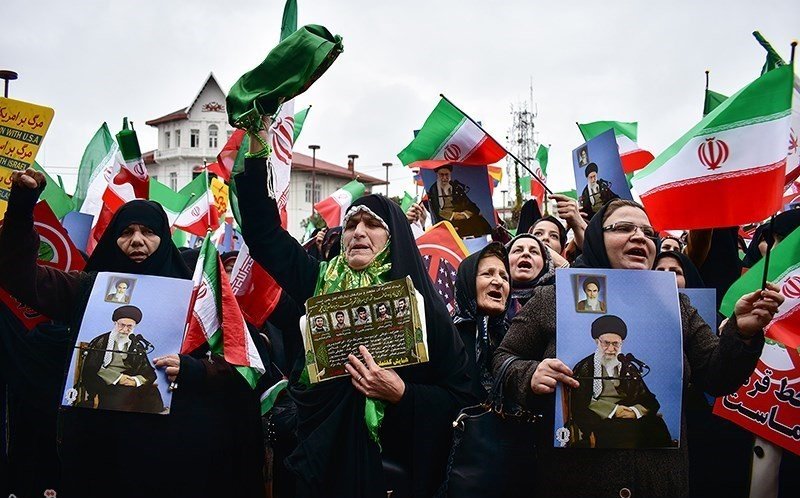
During the nighttime rallies held last Saturday, which were intended to demonstrate support for the regime, chants of “Death to Ghali Shah” were heard – a derogatory nickname given to Ghalibaf that likens him to the shah of the deposed monarchy. This is an unusual slogan, as such chants are usually reserved for Iran’s bitter enemies, primarily the United States and Israel. For opponents of the agreement, the very willingness to reach a compromise with Washington is seen as a national humiliation and an expression of surrender to American pressure, which could harm Iran’s regional status and deterrence. The fact that these rallies are considered by many to directly organised the regime’s apparatchiks, or at the very least supervised by them, indicates that even within the establishment itself, opposing forces are at work, pulling each in a different direction and expressing an internal struggle over Iran’s future.
One of the most prominent centers of opposition is the Paydari faction, the radical ideological current within the conservative camp, which in recent years has emerged as one of the most influential voices in the Iranian political system. Members of the bloc have recently denounced the prospective US-Iran agreement, which they see as a strategic surrender and a betrayal of the principles that have guided the Islamic Revolution since 1979.
Mahmoud Nabavian, deputy head of the parliament’s National Security and Foreign Policy Committee and one of the most prominent Paydari figures, harshly criticised the draft agreement on his Twitter page, charging that it contravenes the positions of Supreme Leader Mojtaba Khamenei. Nabavian characterised the agreement as a “pure defeat”. Kamran Ghazanfari, another Paydari-affiliated parliamentarian, attacked Foreign Minister Abbas Araghchi and claimed that the emerging understandings contradict the leader’s directives.
Opposition to the US-Iran agreement is not limited to the parliamentary arena. On 14 June, 34 members of the Assembly of Experts – the senior religious body whose duties include electing the supreme leader and supervising his overall performance – issued a public statement in response to the emerging agreement. Assembly members warned against signing an agreement that would go beyond the “red lines” including the issues of Strait of Hormuz control, transit fees for foreign vessels, and the exclusion of the nuclear issue from the negotiating framework. According to them, any deviation from these principles would be “illegitimate and unacceptable”. The very publication of the statement reflects the depth of concern in the conservative camp about compromising with the enemy.
On the other hand, the establishment’s more moderate forces see adherence to this uncompromising stance as a real danger to the country. In their view, the ideological entrenchment and the opposition to any concessions to the West no longer serve Iran’s national interests, but rather weaken its international standing, worsen its economic situation and may even “lead to its downfall”. Against this backdrop, it was recently reported that Pezeshkian banned the presence of Paydari members at pro-regime events, going so far to issue a directive not to wave banners opposing concessions on the nuclear issue.
The supreme leader’s absence in public, however, is the most significant factor escalating the internal regime divide. Throughout the ceasefire negotiations, and in fact since he took office, Mojtaba Khamenei has refrained from publicly expressing his position, nor has he engaged in direct dialogue with the parties managing the negotiations. His lack of appearance has created political vacuum which various competing factions are seeking to fill, and each of which asserts itself as the authentic representative of the leader’s will and the true revolutionary path.
For decades, the Iranian regime has managed to maintain stability through a clear hierarchical mechanism, centered on the unquestioned authority of the supreme leader. But when that authority is not clearly expressed, disputes that were once kept beneath the surface are becoming increasingly visible. In this sense, the issue of the US-Iran agreement is not just a dispute over foreign policy or the future of the nuclear program. It reflects a much deeper struggle over the Islamic Republic’s identity, the balance of power between its various blocs and the question of who will dictate its path in the post-Ali Khamenei era.
It is possible, then, that the most significant challenge facing Tehran today is neither diplomatic pressure nor military threats but rather the widening rift within its own rival factions. The progress of the negotiations exposes not only of the gaps between Iran and the United States, but more significantly the deepening fault lines within Tehran’s ruling elite.