
During the Iran war, Tehran’s official messaging sought to project resilience on the home front, while broadcasting defiance of its enemies to global audiences. The regime portrayed itself as embattled yet enduring — bruised, but steadfast in the face of an American–Israeli onslaught. While its extensive propaganda apparatus at times relied on AI-generated disinformation to obscure clear military inferiority, no such fakery was required to highlight the war’s disruptive economic effects on the United States and the wider world.
Tehran wants to convince audiences at home and abroad that this strategy has paid off. By amplifying the spectre of widespread economic disruption, Iranian officials boast that they coaxed Washington into a ceasefire. Yet such outward bravado cannot hide or erase a far more severe domestic reality. The economic damage sustained within Iran is both more structural and irreparable than the disruption inflicted on enemies and bystanders abroad. Regardless of whether the United States and other global actors succeed in recalibrating the world economy to absorb the wartime shocks, Iran now confronts the prospect of long-term — if not irreversible — economic decline.
The ceasefire has not altered the immutable constraints plaguing the Iranian economy. U.S.-led sanctions preventing access of the international financial system remain firmly in place, while an estimated $100 billion in overseas assets are still frozen, severely limiting Tehran’s fiscal manoeuvrability. At the same time, popular discontent — already surfacing before the conflict in the form of weekslong winter protests, the largest since the Islamic Revolution — is likely to intensify as wartime hardship compounds an already weak economic baseline. Any official claims of victory are likely to ring hollow among the Iranian population, which has long grappled with visible and acute financial strain.
Prior to the war, inflation in Iran hovered near 50%, while the rial had undergone a severe depreciation to the point of being considered nearly worthless, key factors fueling the anti-government demonstrations. The World Bank had already projected a 2.7% decline in GDP in the year preceding the war, reflecting both the cumulative burden of international sanctions and the aftershocks of the 12-day war in June. The latest war only worsened these trends. According to The Economist, the Iranian currency lost a further 8% of its black-market value during the five-week war, following a 60% decline in the preceding months. Wartime inflation surged an additional 6% nationwide, with Tehran residents reporting an even heavier burden: a 40% rise in the price of basic goods within weeks.
Post-war forecasts paint an even bleaker picture. The International Monetary Fund (IMF) projects economic contraction of 6.1% this year, alongside inflation approaching 70%. Iranian authorities estimate direct war damage at no less than $270 billion. Additional losses stemming from disruptions in the Strait of Hormuz are valued at $5 billion to $15 billion, while the state’s Internet shutdown has trimmed a further $1.5 billion to $2.5 billion in lost value. Reconstruction, according to Iran’s central bank, will require at least a decade. Meanwhile, external pressure continues unabated: an analysis of President Trump’s naval blockade by The Wall Street Journal estimates Iran losing approximately $435 million per day, including $276 million in exports.
One of the most severe post-war shocks is felt in the energy sector, the backbone of Iran’s export economy. Tehran had hoped to compensate for wartime losses through increased oil sales, aided by a 40% rise in global prices. It boosted oil shipments to its Chinese ally by 23% to 1.6 million barrels per day, while resuming such exports to India after a seven-year hiatus, shipping 2 million barrels in March. The regime also banked on normalising its stranglehold on the Strait of Hormuz to impose a $2 million transit fee on each foreign vessel it authorised to cross the waterway. However, these steps have been undermined by the U.S. counter-blockade, which have both deterred foreign participation in the transit fee mechanism and challenged Iran’s own energy export capabilities. The country’s storage infrastructure can accommodate between three weeks to eight weeks’ worth of oil produced, after which it would be compelled to halt petroleum output altogether.
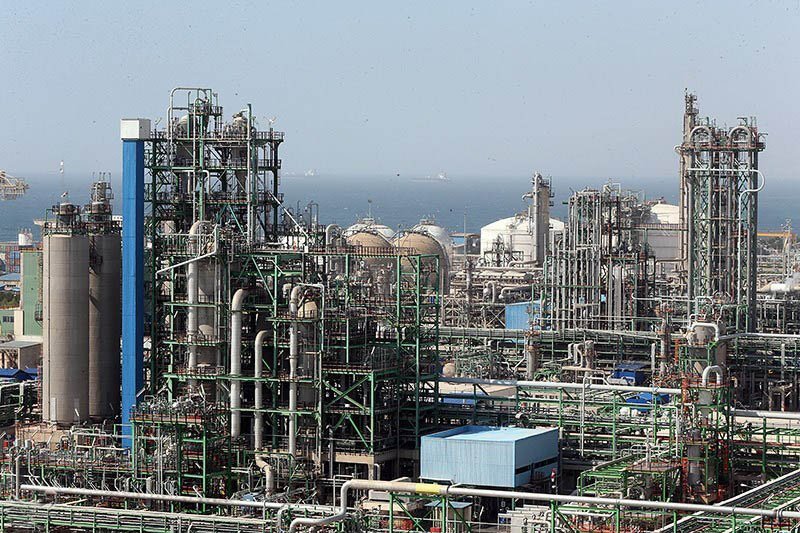
The outlook for the petrochemical sector, which generates roughly $29 billion in sales per year, is similarly gloomy. Israeli strikes targeted strategic petrochemical facilities, including major production hubs in Asaluyeh and Mahshahr, disrupting 85% of export capacity. In response, authorities imposed a comprehensive ban on petrochemical exports on 13 April to prioritise domestic supply and prevent imminent shortages.
The social consequences of this economic collapse are already evident. A New York Times investigation relying on regime officials speaking off-the-record stated that 1 million Iranians have reportedly lost their jobs, with far greater losses anticipated. Some observers, including a former senior official in Iran’s Social Security Organization, predict that as many as 12 million workers — just under half of Iran’s workforce — are at risk of being laid off in the coming months. Iran’s steel industry, one of the world’s ten largest, is alone at risk of losing 5.5 million jobs due to Israeli assaults on key facilities that halted production. Thousands of steel workers have already been sent home indefinitely, while labourers in ancillary industries also face compromised job security.
Against this backdrop, Iran’s decision-makers face an increasingly stark strategic dilemma. With a new round of Pakistani-sponsored negotiations with the United States on the horizon, mounting domestic woes could pressure Tehran to concede on supposedly “red-line” issues such as nuclear enrichment and missile development in exchange for economic relief. In 1988, Supreme Leader Ayatollah Ruhollah Khomeini likened his reluctant decision to end the eight-year war against Iraq without a clear victory to “drinking poison“. Newly appointed Supreme Leader Mojtaba Khamenei and the IRGC leadership now face a similar dilemma, as the war’s inescapable economic damage fuels the potential for renewed domestic protests. The regime’s prioritisation of self-preservation, tightly linked to basic financial stability, may once again tempt it to swallow a bitter pill.