
Nearly a month into the armed confrontation between Iran and its American and Israeli adversaries, a widening cast of Middle Eastern and global actors has transformed both the scale and character of the conflict. The Islamic Republic’s strikes on Sunni Arab neighbours have drawn them into the fray, albeit reluctantly, and tested their air defence capabilities. France deployed defensive assets to the Eastern Mediterranean to help repel Iranian aggression. Paris — along with several other U.S. allies in Europe and Japan — faces strong Trump administration pressure to contribute to an international force ensuring free navigation in the Strait of Hormuz.
The Iranian regime, for its part, activated its proxy network to divert precious American and Israeli resources to secondary theatres. Hezbollah, despite severe degradation during the 2023-24 conflict, has launched thousands of rockets at Israeli cities and border installations from Lebanon. Pro-Iranian Shia militias in Iraq have targeted American bases and Washington’s Kurdish partners in the north with drones and missiles.
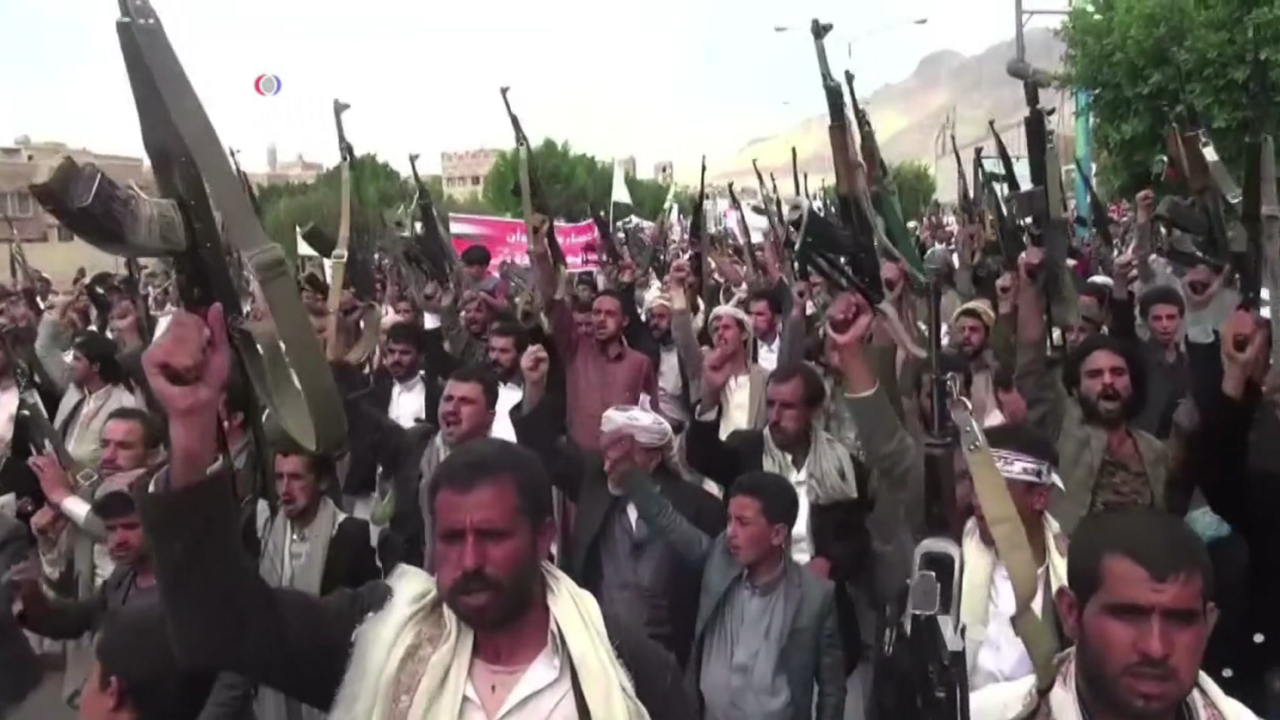
Yet one ally remains mysteriously absent: Yemen’s. The movement — formally known as Ansar Allah — launched attacks against Israel less than two weeks after the 7 October assault and has previously targeted Saudi Arabia and the United Arab Emirates. Save for vague statements of support for Iran, the Houthi’s near-total inactivity in a far more consequential war therefore appears puzzling. The absence of meaningful kinetic action has left many guessing about Houthi motives. To understand their posturing since hostilities began on 28 February, it is necessary to revisit the group’s development, strategic constraints and, above all, the non-binding, open-ended nature of its partnership with Iran.
Who are the Houthis?
The Houthis hail from northern Yemen’s Zaydi Shia minority and take their name from their founder, Hussein al-Houthi. What began in the early 1990s as a movement demanding greater Zaydi autonomy from the Sunni-dominated state escalated into a secessionist rebellion in 2004. Over the following decade the group established de facto sovereignty over northern Yemen, including the Red Sea coastline. The capture of the capital Sanaa in 2014 triggered a protracted but inconclusive Saudi-led intervention, transforming Yemen into a central arena for regional rivalry between Riyadh and Tehran.
After Hussein al-Houthi’s death, the mantle passed to his brother Abdel-Malik, who steadily deepened ties with Tehran and drew the movement into Iran’s so-called “Axis of Resistance”. Normally doctrinally rigid, the Islamic Republic overlooked theological differences — Zaydi Shiism diverges from Iran’s Twelver belief on the legitimacy of a specific Imam more than a millennium ago — in pursuit of shared strategic objectives and common enemies. The precedent had already been set in Syria, where Tehran allied itself with the heterodox Alawite sect led by Bashar al-Assad. In the Houthis, Iran found a useful partner positioned next to an essential maritime chokepoint and capable of pressuring Saudi Arabia from its vulnerable southern flank. For their part, the Houthis welcomed the backing of a powerful patron as a means of defeating Yemen’s central government and securing regional prestige as a formidable military actor.
Iranian assistance, overseen by Qassem Soleimani of the IRGC’s external-facing Quds Force, took the form of weapons smuggling, advanced training and intelligence support. This sponsorship enabled the Houthis to upgrade its light arms inventory to a sophisticated arsenal that included anti-tank missiles, ballistic missiles, anti-ship projectiles, and drones. Under Tehran’s tutelage, a localised insurgency metastasised into a regional threat. The Houthis did not merely dominate northern Yemen but also displayed the capability to damage Saudi energy infrastructure, disrupt Emirate airport operations and endanger globe-spanning shipping through the Bab al-Mandeb strait.
Although the Houthis became part of a wide-ranging alliance with Iran, they have persistently refused to become mere proxies without independence or influence. Unlike Hezbollah or the Iraqi militias, which were created and closely supervised by Iran’s Revolutionary Guards, the Houthis were a home-grown movement long before Tehran cultivated a relationship with them. Fiercely protective of their autonomy, they have preserved independent decision-making from their seat of power in Sanaa. As with Hamas, their partnership with Iran is based on ideological affinity and generally overlapping strategic ambitions but prudently rejects subordination to Tehran’s will.
Patterns of Houthi behaviour since 7 October
This operational autonomy has been evident over the past two and a half years. The Houthis began firing at Israel on 19 October 2023 and simultaneously attacking Red Sea shipping they alleged had Israeli links, characterising both campaigns as acts of “solidarity” with the Palestinians. These operations were suspended during the temporary Israel–Hamas ceasefires of November 2023 and January 2025, before ending altogether when the Gaza truce took hold in October 2025. The movement has since made clear that any resumption of attacks on Israel or maritime targets would depend on Israeli behaviour in Gaza, particularly restrictions on humanitarian aid and the naval blockade.
On the contrary, Houthi behaviour during the 2025 Israel–Iran war was restrained. The group claimed responsibility for a lone aerial launch towards Israel during the 12-day conflict and issued no ultimata linking its restraint to Israeli strikes on Iran. Nor did it undertake “solidarity” attacks following Israeli escalations against Hezbollah, including the pager operation or the assassination of Hassan Nasrallah. Even after the Israel–Hezbollah ceasefire of November 2024, Sanaa insisted that its missile campaign was tied exclusively to events in the Palestinian arena. The logic is revealing of the Houthi paradigm: violence framed as serving the Palestinian cause bring worthwhile gains – such as elevated status in the Muslim world as an effective protector of the Palestinians, whereas entering wars involving Iran and its proxies offers scant benefit and considerable risk.
Those risks are costly. Houthi actions over recent years have invited punishing retaliation. Airstrikes have crippled infrastructure, immobilised Sanaa airport and curtailed operations at Hodeidah port. Israel’s killing of a dozen Houthi ministers last August exposed deep intelligence penetration and suggested that the group had misjudged Israeli red lines. America’s six-week Operation Rough Rider, though far from decisive, further degraded Houthi capabilities and culminated in a pledge in May 2025 not to target U.S.-linked shipping in the Red Sea. The Houthis held to this commitment even after American strikes on Iranian nuclear facilities.
The Houthis are also cognizant of threats on the ground from within. In late 2025 the UAE-backed Southern Transitional Council seized large swathes of Yemen, edging perilously close to Houthi-held territory before internal rifts among Saudi-backed anti-Houthi forces stalled the advance. The Houthis were spared a ground invasion as much by their enemies’ disunity as by their own strength. They may not be so fortunate if they provoke the Gulf states again, particularly now that those countries — having suffered Iranian aggression themselves — might respond in concert.
Taken together, these factors suggest that Houthi abstention from the current war reflects cold-hearted, rational calculation and instinctive self-preservation. The prospect of Gulf-backed ground offensives on its home turf, targeted Israeli assassinations of its now-exposed leaders, and unrestricted American retribution may account for the hesitancy in Sanaa. As the war proceeds and its ally incurs additional setbacks, the Houthi partner may assess that the Islamic Republic itself looks especially vulnerable and, taking a cue from the Chinese and Russians, that it is best to hedge bets elsewhere. Tehran is undoubtedly interested in its Yemeni ally joining the conflict at a time and place of its choosing. But history suggests that the Houthis, proud of their autonomy and fearful of consequences for reckless behaviour, will intervene only on behalf of its own interests, rather than those of its patron.