
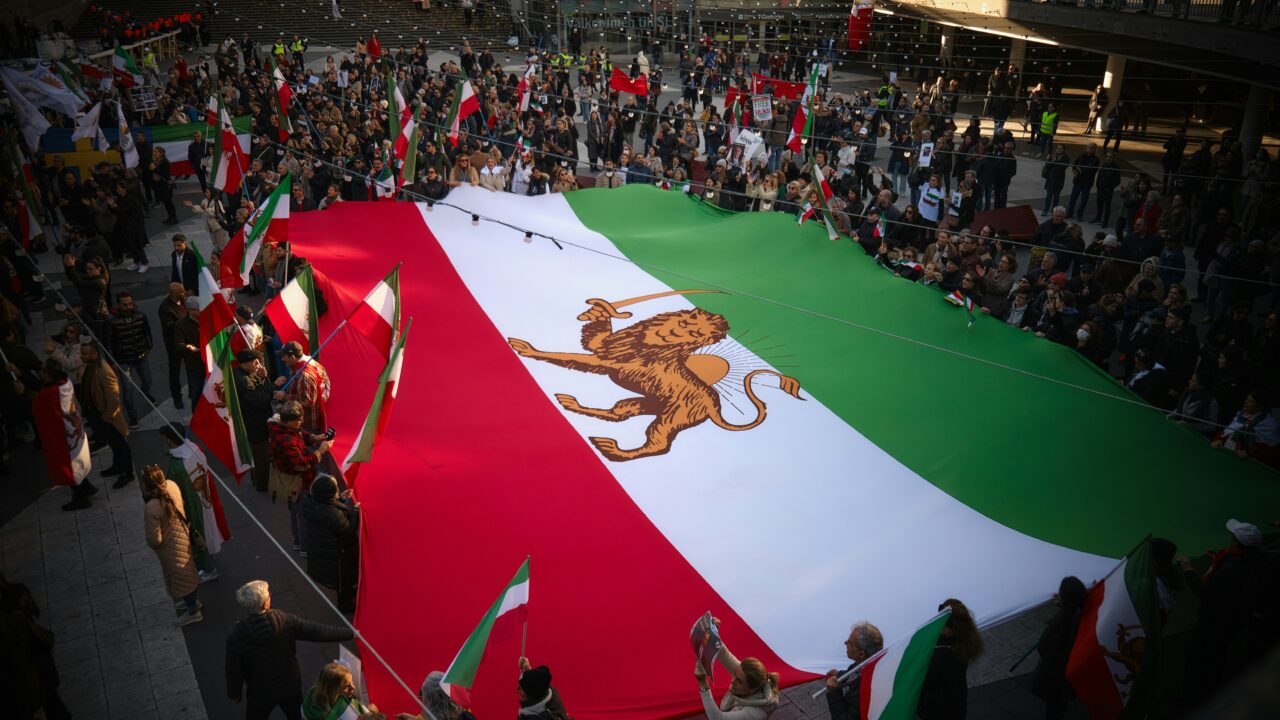
Iran teeters on the edge. Waves of protests have swept the country, sanctions are tightening, the currency is sliding, rivers are drying up and yet the regime stands. Its guarantors are two coercive pillars: the Islamic Revolutionary Guard Corps (IRGC) and the Basij militia. Both have shown a willingness to crush dissent brutally. With war threats looming, a pressing question arises: would these pillars remain cohesive under sustained strain?
The Islamic Republic faces a convergence of pressures. In early January 2026, millions poured into the streets in what observers described as the largest demonstrations since the 1979 revolution. The authorities responded with a near-total internet blackout and a brutal crackdown. Estimates suggest thousands have been killed and tens of thousands arrested, in what human rights groups call one of the most violent crackdowns in recent memory.
Meanwhile, inflation has soared, and the cost of food and basic goods has risen sharply, squeezing living standards. The currency is at a record low, trading around 1.65 million rials to the dollar on the open market, or about 165,000 tomans. A worsening water crisis, after years of drought, adds to public frustration. Overlaying these strains is the prospect of war with America or Israel. Tehran and Washington are locked in nuclear negotiations in Geneva against the backdrop of the largest U.S. military buildup in the region in decades. Any conflict would test the system severely.
The Basij is the regime’s mass shield. Embedded in neighbourhoods, school and workplaces, it draws heavily from poorer, more conservative strata. Its reach is intimate: members often double as local enforcers, patrolling markets, schools, and mosques, reporting signs of dissent even among neighbours. Yet that embeddedness is a double-edged sword: Basij families queue for the same subsidised goods and struggle with the same soaring prices as everyone else.
The IRGC is different. Disciplined, hierarchical and ideologically curated, it presents itself as the revolution’s steel core and the Ayatollahs’ most important survival insurance. It controls some of the state’s most sensitive military assets, from the ballistic missile arsenal and drone fleets to asymmetric naval forces deployed in the Strait of Hormuz and oversees the elite Quds Force, which projects Iranian power through allied militias abroad. Over decades, it has also become a powerful economic actor, embedded in construction, energy, telecommunications and finance. Privileged access to contracts and regulation has made the Guards both guardians and beneficiaries of the state.
That entanglement brings power. It also brings vulnerability. An organisation that defends the system partly because it profits from it may defend it less cohesively if those profits shrink. Severe sanctions, economic breakdown, or targeted strikes on strategic assets would not only weaken the broader economy; they could strain the institutional glue that binds the Guards.
Generational dynamics add uncertainty. Many rank-and-file members in both organisations are young and far from decision-making circles. In tranquil times, hierarchy ensures discipline. In chaotic ones -prolonged external conflict, contested succession, breakdowns in communication -orders may blur. Ambitious commanders could frame extraordinary moves as necessary to “save the nation”. Fragmentation, rather than defection, would be the greater risk.
To that, add another important armed force within Iran: the traditional army, or the Artesh. Professional, disciplined, and less politicised than the IRGC, it is in theory a stabiliser – yet also a potential wildcard. Officers have long chafed at the Guards’ privileges and recent protests have prompted cautious overtures from opposition figures seeking to sway loyalties. Their role in any future upheaval is uncertain: they could steady a widely resented regime, or tilt the balance toward change.
Authoritarian systems often appear solid until they fracture. Iran’s security apparatus has so far proved formidable. But shields are tested not in skirmishes, but under sustained siege. Should protests rage while missiles fly, even the Guards’ vaunted discipline could falter: fragmented commands, mutinous units, or local commanders acting on their own could tip the balance. The Islamic Republic’s survival may hinge less on the hardness of its shield than on whether it cracks under pressure.