
In the 21st century, power is no longer measured solely in jet fighters or trade deals. Perceptions, narratives, and humanitarian visibility often shape international relations long before armies march or agreements are signed. Political scientist Joseph Nye described this phenomenon as “soft power”, the ability of a state to influence others through attraction rather than coercion. Today, countries increasingly compete not only through economic or military strength, but also through culture, aid, religion, and media ecosystems that shape global public opinion. Therefore Turkey’s soft power constitutes an important case study.
For Turkey, soft power has become a central pillar of foreign policy. Through television, religion, and humanitarian outreach, Ankara has built a multi-layered network of influence spanning the Balkans, the Middle East, Central Asia, Africa, and even Latin America. State agencies such as the Disaster and Emergency Management Presidency (AFAD) and the Turkish Red Crescent operate on the front lines of this strategy, delivering food, medical supplies, and disaster relief in more than 50 countries. These efforts address urgent needs while positioning Turkey as a responsive and compassionate global actor.
AFAD, in particular, has emerged as a key instrument of Turkey’s diplomacy. Beyond its domestic role in managing earthquakes and natural disasters, the agency has been active in major international crises. It played a visible role in delivering aid to Somalia during the 2011 famine, where Turkey’s rapid response helped solidify long-term diplomatic and economic ties. Similarly, in the aftermath of the Syrian civil war, AFAD coordinated cross-border humanitarian operations, including the management of refugee camps that hosted millions of displaced Syrians. The agency has also been active in regions such as Pakistan following floods, Lebanon after the Beirut port explosion, and Ukraine during the war with Russia, sending emergency supplies and logistical support. These interventions are often accompanied by high-level political visits, reinforcing the symbolic connection between humanitarian action and state presence.
Building on this humanitarian visibility, Turkey extends its influence beyond crisis response into the cultural sphere, where emotional connection and everyday storytelling play a powerful role. Turkish television dramas have become the most visible cultural instruments of this broader strategy. By the late 2000s, Istanbul-produced soap operas had begun captivating audiences far beyond Turkey. The romantic drama Gümüş, broadcast as Noor in the Arab world, reportedly drew tens of millions of viewers. Historical epics such as Diriliş: Ertuğrul (Resurrection: Ertuğrul) and Muhteşem Yüzyıl (The Magnificent Century), along with contemporary dramas like İstanbullu Gelin (Bride of Istanbul), introduced audiences to both Turkish modern life and Ottoman history.
These shows serve a dual purpose: they entertain while subtly promoting Turkey as a cultural leader in regions once under Ottoman influence and throughout the wider Muslim world. Tourism from Arab countries surged after Gümüş, and in Pakistan, Diriliş: Ertuğrul became a national phenomenon. Yet these successes are not uncontested. Critics argue that the emphasis on Ottoman history and Islamic identity carries a political undertone, reinforcing nostalgia aligned with Turkish President Recep Tayyip Erdoğan’s Neo-Ottomanist worldview.
Touching to the hearts of the believers
This blending of cultural appeal with political undertones does not remain confined to television. Organisations like the Presidency of Religious Affairs (Diyanet) translate similar narratives into lived community experiences, reinforcing Turkey’s presence through religion, education, and diaspora engagement.
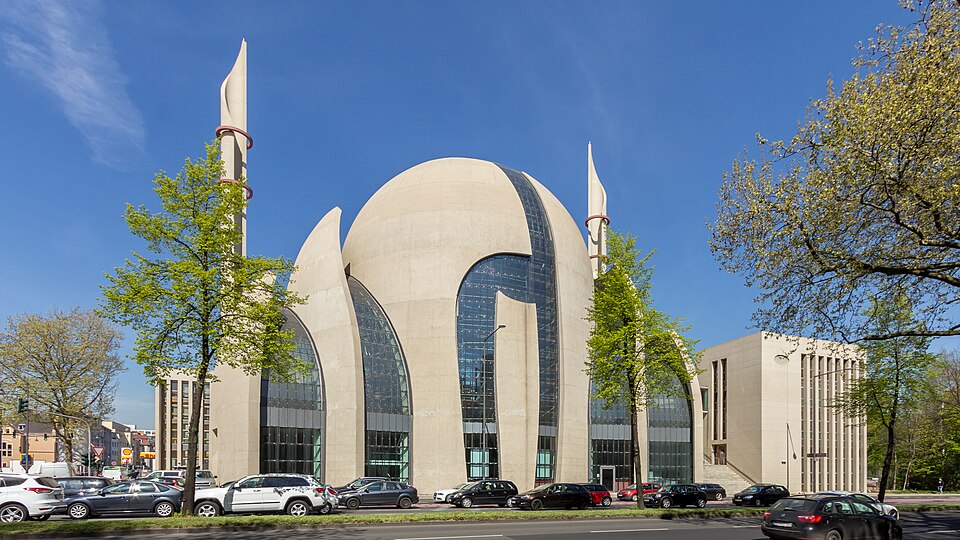
The Diyanet extends its influence by engaging Muslim communities abroad through mosques, educational programmes, and cultural projects. One prominent example is the Cologne Central Mosque, built and funded by DİTİB, the German branch of Diyanet. The mosque functions not only as a place of worship but also as a cultural hub, hosting interfaith dialogues, language courses, youth programmes, and community events that strengthen ties between diaspora populations and Turkey.
The Diyanet has also financed mosque construction and restoration projects in Muslim regions of the Balkans, particularly Albania and Bosnia and Herzegovina, where Ottoman-era religious heritage remains significant. It also deepens Turkey’s soft power by organising international religious education programmes, sends imams abroad, and provides scholarships for students to study theology in Turkey. During Ramadan and other religious periods, Diyanet coordinates aid campaigns and distributes food packages in Africa and Asia, blending religious outreach with humanitarian assistance. These initiatives reinforce Turkey’s image as a protector of Islamic heritage and a leader within the global Muslim community.
Despite these positive contributions, Diyanet, and especially DİTİB, is often mentioned in connection with espionage attempts against Turkish opposition circles. According to German intelligence reports, Diyanet used its imam network to gather information on Erdoğan regime dissidents living in Germany. European governments have grown increasingly uneasy about this expanding influence. In Germany, officials have pressured DİTİB to reduce political messaging, while also investing in domestic imam training to limit reliance on clergy sent from Turkey. France has taken stricter measures, closing Diyanet-linked financial channels and ending programmes that allowed foreign religious personnel to operate with limited oversight.
Behind the allure of television shows, humanitarian initiatives, and faith-based activities, there is a deeper political complexity. Turkey’s soft power demonstrates both its reach and its limitations. Humanitarian agencies like AFAD build goodwill through visible, life-saving interventions, while cultural exports and religious networks deepen emotional and ideological connections. Yet these same tools can generate suspicion when perceived as instruments of political ambition.
In a time when narratives, cultural identity, and humanitarian action influence global perceptions as much as military capabilities, Ankara’s strategy displays the dual nature of Turkey’s soft power. When rooted in sincere engagement, these efforts can foster respect and cooperation, yet when closely linked to political or ideological objectives, it may also trigger pushback and suspicion.