
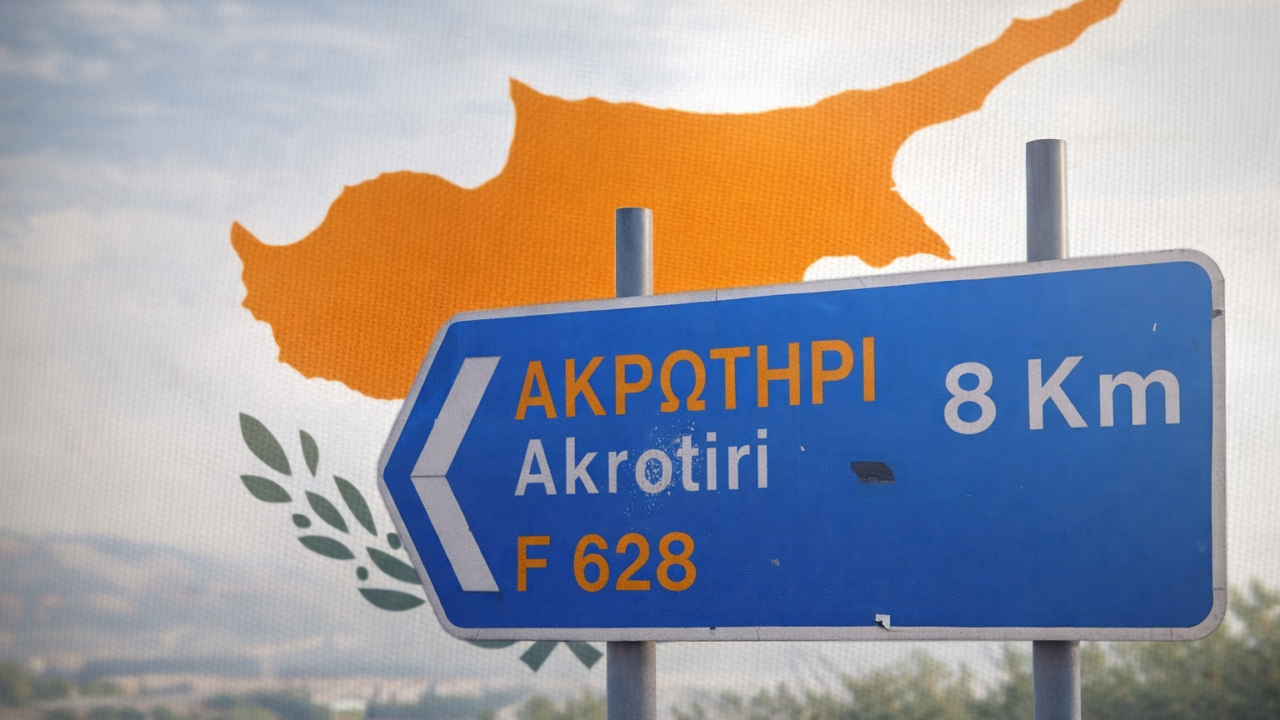
Cyprus lies well beyond the Middle East’s battlefields, yet it has been drawn into the conflict between Israel, the United States, and Iran in an unprecedented way. Recent Iranian–Hezbollah missile and drone strikes on the British RAF base at Akrotiri caused widespread disruption and evacuations. The attacks underscored warnings from Israeli officials, who have long argued that Iran poses a threat not only to Israel but also to Western interests.
Following the opening strikes of the war, which killed Iran’s supreme leader, Ali Khamenei, along with several senior figures, Tehran chose to widen the confrontation. In the ensuing escalation, the United Arab Emirates, Qatar, Oman, Jordan, Saudi Arabia, Kuwait, Azerbaijan, and even Turkey were targeted by Iranian strikes. This was a significant miscalculation, transforming a war with Jerusalem and Washington into a regional crisis that could invite other nations to strike Iran. Yet, Tehran did not stop there. In an unprecedented move, the regime directed ballistic missiles towards the European Union by striking Cyprus, which currently holds the rotating presidency of the EU Council. At the same time, Hezbollah, Iran’s Lebanese proxy, launched drones towards the island in a show of solidarity.
Although the attacks targeted British bases, their broader purpose was to signal disapproval of the close relationship Cyprus has been cultivating with Israel and Greece. At a trilateral summit in Jerusalem on 22 December 2025, the three countries described their cooperation as a strategic partnership. Beyond energy and tourism, the alliance increasingly extends to defence and security. Cyprus has recently activated Israeli-made Barak MX air-defence systems. Cypriot media have also reported that the island plans to acquire three additional defence systems from Israel, though their names have not been disclosed. Meanwhile, Greece, the guarantor state of Cyprus, maintains close defence cooperation with Israel.
The Cypriot–Israeli alliance proved its worth during the Twelve-Day War in June 2025. Cyprus acted as a hub for Israeli civilian aircraft and sheltered Israelis stranded abroad, facilitating their rapid evacuation through frequent flights. The island has thus become a key ally for Israel, providing Jerusalem with valuable logistical flexibility.
This rapprochement is unwelcome both to Iran, Israel’s regional adversary, and to Turkey, which has occupied the northern part of the island since 1974 in violation of international law. The day after the Israel–Greece–Cyprus trilateral summit, Turkey’s pro-government newspaper Yeni Şafak named Israel the primary threat to Turkish national security. President Erdoğan’s government is clearly uneasy about Israel’s expanding influence on the island. It is also concerned about the transfer of advanced military technology to Cypriot forces.
Turkey is also uneasy about the growing presence of other European actors. Following Iran’s attack on the island, Greece, France, and the United Kingdom expressed support for Cyprus and announced military assistance. These deployments were presented as measures to strengthen the island’s defence against Iran. Nevertheless, they inevitably carry wider strategic implications. Turkey, which maintains a substantial military presence in northern Cyprus, views such developments with suspicion.
Often described as an “unsinkable aircraft carrier” in the eastern Mediterranean, Cyprus has recently punched well above its weight, daring to compete in the league of giants. Through its strategic initiatives and its position within the European Union, the island has signalled its intention to play a role in eastern Mediterranean affairs.