
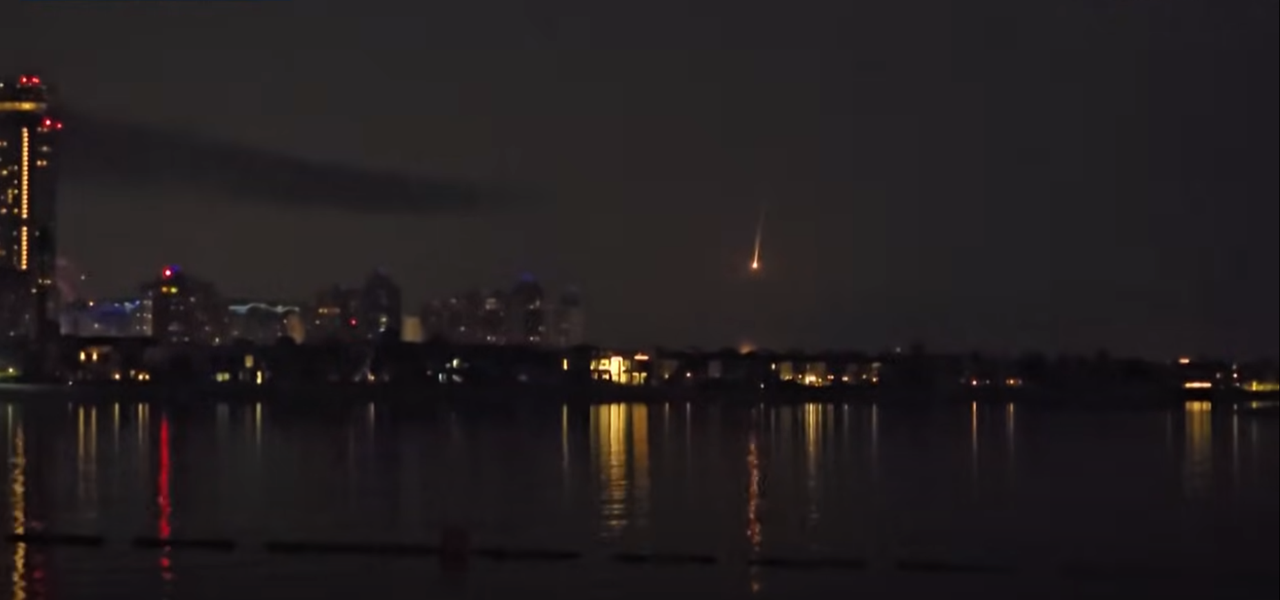
For decades, the Gulf Arab states have operated under an unspoken assumption: that wars in the Middle East were things that happened elsewhere. Conflicts might rage in Gaza, Yemen, or Syria, but the gleaming towers of Dubai and the manicured boulevards of Manama existed in a different register – a parallel region of business-class flights, luxury hotels and sovereign wealth funds, insulated from the disorder swirling around them. Operation Epic Fury, and Iran’s ferocious response to it, has conclusively ended that assumption.
Within hours of the US-Israeli strikes on Iran, strikes that killed Supreme Leader Ayatollah Ali Khamenei and decimated much of the Islamic Republic’s senior security establishment. In response, Tehran launched an unprecedented retaliatory barrage across the Gulf. Ballistic missiles and Shahed drones rained down on Bahrain, Kuwait, Qatar, the UAE, Jordan, Saudi Arabia and Iraq. Airports were struck. Hotels burned. Residential towers shook. Millions of civilians who had never once rehearsed what to do when air raid sirens sound found themselves scrambling under tables or filming the sky with their phones.
The Geometry of Iran’s Retaliation
Iran’s targeting logic was deliberate and, in its own way, strategically coherent. Every country struck hosts US military infrastructure. Al-Udeid Air Base in Qatar, Al-Dhafra in the UAE, Ali Al-Salem in Kuwait and the US Navy’s Fifth Fleet headquarters in Bahrain’s Manama were all directly engaged. The IRGC was sending a message as much as it was conducting a military operation: if American power projection in the region is enabled by Gulf hospitality, then Gulf hospitality carries a price.
What Iran could not fully control, or perhaps did not try to, was collateral spread. A Shahed drone punched through a residential tower near the Fifth Fleet compound in Manama. Debris from intercepted missiles set the Fairmont Hotel on the Palm Jumeirah ablaze. The facade of the Burj Al Arab, one of the most recognisable buildings on earth, was scorched by falling intercept shrapnel. Dubai International Airport, the world’s busiest international hub by passenger numbers, sustained damage to a terminal concourse. Kuwait’s international airport was struck directly, injuring dozens. In Abu Dhabi, one person was killed: a Pakistani migrant worker, a detail that encapsulates the human geography of a region where foreign nationals vastly outnumber citizens in the workforce.
The UAE’s Ministry of Defence reported intercepting 132 missiles and 195 Iranian drones over the course of the assault: figures that speak not only to the scale of the attack but to how thin the margin of safety truly was. Even the most sophisticated air defence architecture cannot guarantee a 100% intercept rate at that volume and it didn’t.
Unprepared, Undrilled, Unnerved
There is a particular kind of shock that comes not from the magnitude of damage but from the violation of a deeply held mental model. The populations of the Gulf states: citizens and the vast expatriate communities that constitute the majority of residents in countries like the UAE and Qatar, simply had no cultural or institutional framework for what unfolded on Saturday.
The populations of the Gulf states: citizens and the vast expatriate communities that constitute the majority of residents in countries like the UAE and Qatar, simply had no cultural or institutional framework for what unfolded on Saturday. These are societies built around the promise of security through prosperity, where the implicit contract between government and resident has always been stability in exchange for political acquiescence. Air raid drills, designated shelters, public emergency protocols – none of these form part of the social architecture of a region that has marketed itself to the world as the safest place to do business. When explosions cracked across Dubai’s skyline, the instinct of most residents was to step onto their balconies and film – not to shelter in place, because they had never been told where “in place” was. Gulf governments were quick to urge calm, but the messaging, the language of supply chains and strategic reserves – was the response of states trained to manage economic crises, not kinetic ones.
Gulf governments were quick to urge calm. The UAE authorities asked citizens not to panic-buy food, reassuring the public that strategic reserves were sufficient for extended periods. But this messaging: the language of supply chains and crisis management, was the response of states accustomed to managing economic risks, not kinetic ones. It revealed a gap between the sophisticated financial and logistical machinery these countries have built and the comparatively underdeveloped institutions of civil defence.
The Mediator Gets Burned
Perhaps the most diplomatically significant dimension of the past 24 hours is what happened and what did not happen – to Oman. In a striking act of restraint, Iran initially spared the Sultanate from its retaliatory barrage, recognising its singular role as the indispensable back-channel between Washington and Tehran. Oman’s Foreign Minister Badr Albusaidi had been in Washington just the day before, meeting with Vice President Vance and telling CBS News that Iran had agreed to zero stockpiling of nuclear enrichment — what he described as a major breakthrough. Hours later, the strikes began.
Albusaidi’s public statement was a study in diplomatic anguish. “Active and serious negotiations have yet again been undermined,” he wrote. “Neither the interests of the United States nor the cause of global peace are well served by this”. He urged Washington not to get “sucked in further,” adding: “This is not your war.”
Oman’s immunity did not last entirely intact. A Palau-flagged oil tanker was targeted near the port of Khasab, injuring four crew members and the port of Duqm was struck by drones. Whether these were deliberate Iranian strikes or stray ordnance remains unclear, but the symbolic damage may be more lasting than the physical. If even Oman, the region’s most respected neutral broker, a country that has maintained ties with Iran through every previous escalation, cannot keep itself fully out of the blast radius, the diplomatic implications are grave. The back-channel that has historically allowed Washington and Tehran to step back from the brink is now compromised, its credibility battered along with the Sultanate’s maritime infrastructure.
The Sovereignty Trap
The Gulf Arab states now find themselves in an acutely uncomfortable position that they spent considerable diplomatic energy trying to avoid. For months, Riyadh, Abu Dhabi, Doha and Kuwait City had quietly signalled opposition to a new round of US strikes against Iran, precisely because they understood their geography made them collateral participants in any conflict whether they chose to be or not. Saudi Arabia publicly stated that it would not allow its airspace or territory to be used to target Iran. Qatar, which hosts the largest US air base in the region, has maintained warmer ties with Tehran than its GCC partners. Oman played the role of peacemaker.
None of it was enough. Iran’s foreign minister Abbas Araghchi called Gulf counterparts after the retaliation began, arguing that those nations bore responsibility for failing to prevent the US from using their bases to launch the assault. The logic was coercive and only partially fair, these governments did not invite this confrontation, but it underscores the core strategic dilemma the Gulf has never fully resolved: the US military presence that guarantees their security against Iranian aggression is also the target that makes Iranian aggression against them inevitable in any major escalation.
Saudi Arabia condemned Iran’s strikes as a “flagrant violation of sovereignty”, while pointedly noting it had already warned Tehran that its territory would not be used to target Iran. The implicit message: we tried to stay out of this and you attacked us anyway. Qatar called the Iranian attack on its soil “a flagrant violation of its national sovereignty”. Both condemnations were genuine. Both were also beside the point. Tehran’s calculation was that the hosting of US forces made these states combatants by proxy, and it acted accordingly.
What Comes Next
The Strait of Hormuz remains the ultimate threat hanging over the global economy. Iran has already disrupted traffic through the strait, with around 150 freight ships reported stalled behind its closure. Roughly a third of all seaborne oil exports pass through this narrow chokepoint. The Gulf states themselves, some of the world’s largest oil exporters, cannot move their product without it. Iran knows this. The decision not to formally close the strait yet is itself a form of leverage, a card held in reserve.
For the Gulf governments, the age of strategic ambiguity is over. The missiles have made the choice for them. Sitting on the fence, cultivating Washington for security guarantees while quietly maintaining Tehran for trade and gas revenues, was always a precarious balancing act. It is now an impossible one. Iran has already signalled its position: if you host the bases, you share the consequences. The United States, for its part, will expect loyalty, not neutrality, from allies whose soil it bled to defend. The Gulf states spent years trying to be everyone’s partner. Within 24 hours, they became everyone’s battlefield. At some point and that point may be coming faster than any Gulf capital has prepared for, they will have to decide whose side they are actually on.
What Saturday demonstrated is that the era of managed distance, in which the Gulf states could prosper while conflicts burned at a safe remove, is over. The sky above Dubai is no longer merely a thoroughfare for the world’s airlines. It is now a contested space and the societies beneath it are going to have to reckon with what that means.