
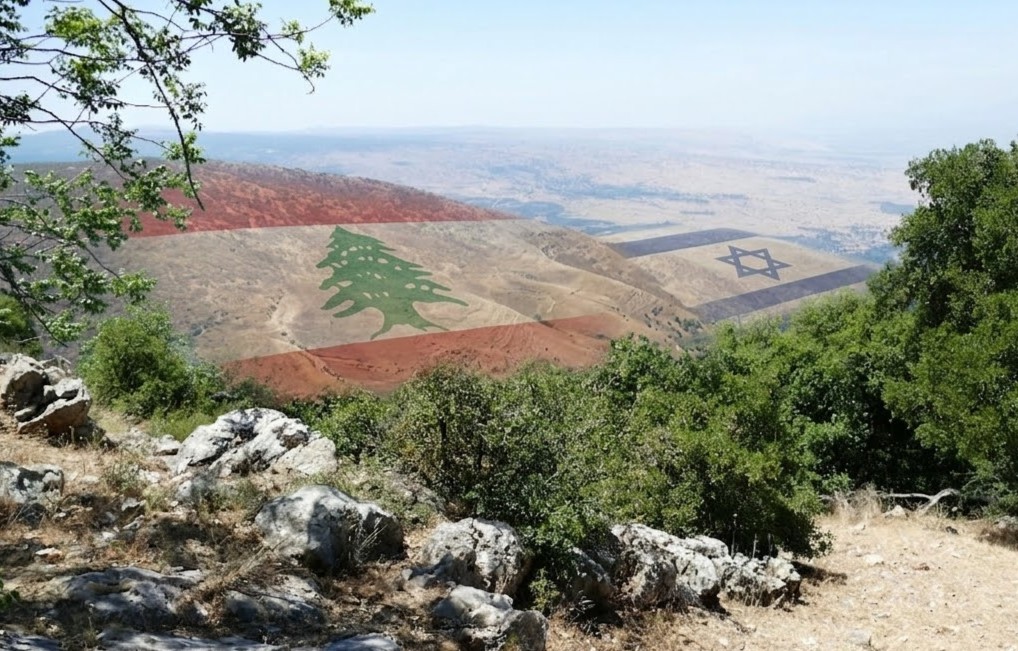
History is replete with ironies, but few are as exquisite as this one. The organisation that did more than any other to make Lebanon synonymous with hostility towards Israel may, through its final act of defiance, have done more to bring about an Israel–Lebanon normalization than any diplomat has managed in 78 years of formal belligerency. Hezbollah, in going “all in” as one of its own sources put it, may have played its last hand. And in doing so, it has shuffled the deck entirely.
The immediate picture is one of destruction and displacement. Since the Iran-backed group launched more than 200 missiles at northern Israel on March 11th in a co-ordinated assault with Tehran, Israel has responded with force. Some 800,000 Lebanese civilians have been displaced. At least 773 people have been killed. Israel is now planning what officials describe as a “massive” ground offensive to seize the entire area south of the Litani River. The Lebanese state, watching its infrastructure threatened and its sovereignty shredded once again by a militia it cannot control, is simultaneously bracing for invasion and scrambling for diplomacy.
A militia trapped by its own logic
To understand why Hezbollah made this choice, one must understand the bind it found itself in before the first rocket was fired. The group had been a belligerent in the ongoing Middle East crisis from its very beginning. First, it opened a front against Israel shortly after Hamas’s October 7th 2023 massacre, subjecting northern Israel to months of rocket and drone fire. Then, in the late summer of 2024, Israel turned its full attention northwards. In a matter of weeks it pulled off one of the most daring intelligence operations in modern history — detonating explosive devices hidden inside pagers and walkie-talkies used by Hezbollah operatives, killing and maiming hundreds and decapitating much of its command structure. It followed this with the killing of Hassan Nasrallah, the group’s charismatic leader, in a strike on his bunker beneath Beirut’s southern suburbs. Nasrallah had led Hezbollah for more than three decades; his death was a blow from which the organisation has not recovered.
Following the ceasefire struck in November 2024, Israel continued striking Hezbollah targets inside Lebanon, while the group, badly weakened and quietly rearming, refrained from retaliating. The loss of its main overland supply route through Syria, severed by the fall of Bashar al-Assad, compounded its difficulties. Hezbollah was absorbing punishment and losing ground, literally and figuratively.
Hezbollah’s leadership had concluded that the moment of reckoning was coming regardless. As a source within the group told AFP, Hezbollah knew “whatever the outcome of the war on Iran, its turn would come and Israel would not hesitate to launch a broad campaign against it.” The killing of Iranian supreme leader Ali Khamenei on February 28th provided the trigger and, crucially, the political cover. Hezbollah framed its entry into the war as a moral obligation. Resistance, not aggression.
The problem with this framing is that most Lebanese do not believe it. Shortly before the first rockets were fired on March 2nd, Hezbollah sent a delegation to inform its ally, parliament speaker Nabih Berri, of its intentions. The Lebanese government was kept in the dark. The effect was electric, but not in the way Hezbollah intended. Rather than rallying Lebanese society behind the banner of resistance, the group’s unilateral decision to drag the country into a new war produced a wave of domestic fury.
The state strikes back
The President’s response was swift. Joseph Aoun accused Hezbollah of working to “collapse” the Lebanese state “for the sake of the Iranian regime’s calculations,” and his government moved to ban the group’s military and security activities outright. After years of allowing Hezbollah to dictate national foreign policy, the state finally secured the political space to articulate what many Lebanese had long felt but feared to express.
That space exists because Hezbollah’s most important strategic asset — its domestic legitimacy — has been severely eroded. The group built itself on the provision of social services, the political representation of the “dispossessed”, and the cultivation of a narrative of “victorious resistance.” Today, each of those pillars is under severe strain. Most damaging of all, its decision to re-enter a war its own country had not chosen has confirmed, for many Lebanese, that Hezbollah answers to Tehran rather than its own constituency.
An accidental diplomat
It is at this juncture that the irony deepens into something almost Shakespearean. Hezbollah was founded, in part, on the proposition that Israel had no right to exist. Its presence made any such agreement politically impossible: no Lebanese government could sign a peace with Israel while a militia more powerful than the army operated freely within its borders. And yet, by over-reaching so catastrophically, it has dismantled the very conditions that made normalisation unthinkable.
France has now tabled a proposal of striking ambition. Under the plan, Lebanon would formally recognise Israel, commit to its sovereignty and territorial integrity, and sign a permanent non-aggression pact — ending a state of war that has persisted since Israel’s founding in 1948. Lebanon would be obliged to disarm Hezbollah and ban its military activities. Israeli forces would withdraw from captured territory within a month as the Lebanese army redeploys southwards, with UNIFIL and a UN-selected monitoring group verifying compliance. Lebanese President Aoun has accepted the proposal as a basis for talks. Sources close to him say that in private, he has gone further still, describing normalisation as something he is prepared to pursue. “Everything is on the table,” one source told Reuters.
The Trump administration is pushing hard for a broad deal to formally end the state of war. Israeli Prime Minister Benjamin Netanyahu has tasked Ron Dermer, an architect of the Abraham Accords and one of the most capable diplomats in Israeli public life, with managing the Lebanon file. That choice signals that Israel, too, is thinking beyond the military campaign, however ferociously it prosecutes it.
Why scepticism is still warranted
It would be a mistake, however, to conclude that peace is imminent. Lebanon has agreed to similar commitments before; under the 2024 ceasefire, the government pledged to disarm Hezbollah south of the Litani but failed to complete the task. The Lebanese state remains fragile, its security forces ill-equipped to forcibly disarm a militia with tens of thousands of fighters and deep roots in the Shia community. Israel has so far rebuffed Beirut’s overtures for direct talks, judging them “too little, too late” from a government that shares its goals but cannot act on them without risking civil war. And Hezbollah still retains what its own leader described as significant weaponry and the will to use it.
The French timeline is ambitious: it calls for a political declaration within a month, a formal non-aggression pact within two, and final border demarcation by year’s end. However, Middle Eastern diplomacy has a long history of collapsing at precisely the moment it appears closest to success.
And yet. The constellation of factors now in play is genuinely without precedent. A Lebanese government openly hostile to Hezbollah. An American administration with both the appetite and the leverage to press for a deal. A French proposal with real diplomatic substance. But perhaps most significantly, Hezbollah is now so weakened that the question of its disarmament has shifted from the “completely impossible” to the “merely very difficult.”
The organisation that did most to make Lebanese-Israeli normalisation unthinkable may have done most to make it possible. Whether Israel ultimately chooses negotiation, and whether Lebanon’s state proves strong enough to honour commitments its militia will resist, remains to be seen. But history may record that Hezbollah, in deciding to go all in, inadvertently cashed out — and in doing so, handed Lebanon a chance it has never before had to finally, formally, choose peace.