
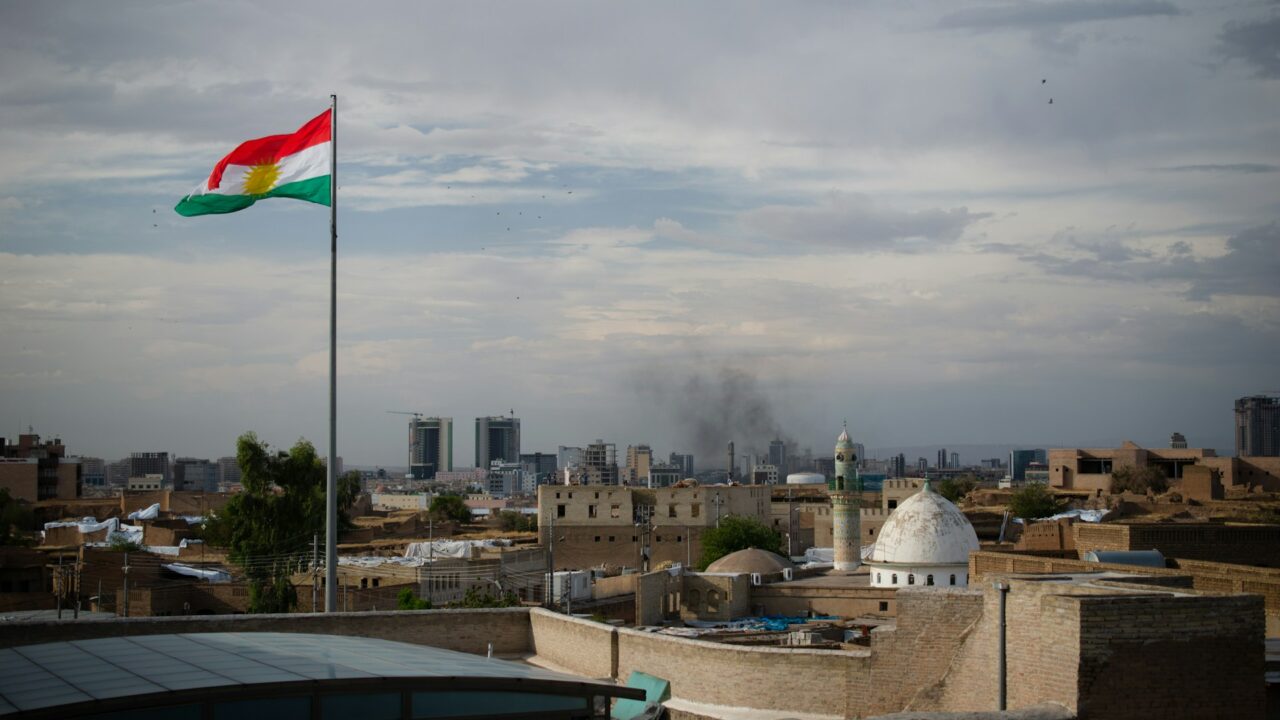
Every February, Munich hosts its annual Security Conference, a gathering of statesmen, diplomats and defence experts to discuss the globe’s most pressing conflicts. This year the spotlight fell on northern Syria and the fragile future of Kurdish autonomy. Skirmishes between government forces and the Kurdish-led Syrian Democratic Forces (SDF) lent urgency to discussions of Syrian Kurds’ political rights. Washington was clear: a meeting with Syria’s foreign minister would occur only if SDF commander Mazlum Kobane was present. The Syrians agreed, giving the Kurds a rare moment of international recognition.
Yet symbolism is not strategy. Some 35 million Kurds live across Turkey, Iran, Iraq and Syria. Often described as the world’s largest stateless nation, they are dispersed across four states that refuse to acknowledge their sovereignty. The language itself is fragmented: major dialects Kurmanji and Sorani differ sharply and use multiple alphabets. Kurdish movements face not just the task of winning sympathy, but of converting their military prowess into enforceable arrangements. Without legally binding guarantees, gains remain fragile.
Before the First World War, Kurdish districts and semi-autonomous polities operated within the Ottoman and Persian empires, enjoying local authority so long as they did not challenge the imperial centers. The collapse of the Ottoman Empire raised Kurdish expectations: a delegation traveled to the 1919 Paris Peace Conference to press their national claims. In 1920, the Treaty of Sèvres recognized Kurdish autonomy in eastern Anatolia and envisaged a possible path to independence: a referendum in Kurdish-majority areas, subject to League of Nations approval. For the first time, Kurdish collective political rights (and the principle of Kurdish autonomy) were enshrined in an international treaty.
This opening was brief. The Turkish war of independence (1919-22) upended Sèvres, and the 1923 Treaty of Lausanne replaced it, recognizing the sovereignty of the new Turkish Republic and erasing any mention of Kurdish autonomy. The agreement turned the Kurdish question into four separate domestic problems: Turkey, Iran, Iraq, and Syria. Kurdish aspirations were no longer an international concern but a challenge for the internal security of newly consolidated states.
In Iraq, promises of autonomy came and went. The 1970 agreement unravelled, and the 1975 Algiers Accord between Iran and Iraq cut off support to Kurdish rebels without their input. Saddam Hussein’s chemical attack on Halabja in 1988 transformed the Kurds’ status from a marginalized minority to victims of mass atrocity. After the 1991 Gulf War, a US-enforced no-fly zone protected northern Iraq, creating the space for the Kurdistan Regional Government (KRG) to emerge. It continues to be the most institutionalized form of Kurdish autonomy to date. Yet when the 2017 independence referendum delivered an overwhelming “yes” vote, Washington sided with Baghdad.
In Iran, Kurdish fortunes have swung between the exhilaration of self-rule and the thud of the security state’s boot. The 1946 Soviet-backed Republic of Mahabad institutionalized self-rule for less than a year. After the 1979 Islamic Revolution, clashes with the regime produced heavy fighting in the early 1980s. Kurdish activism persisted but remained tightly constrained. The 2022 death in custody of Jîna Mahsa Amini, a Kurdish woman, sparked nationwide protests.
In Syria, Kurdish self-administration arose from state collapse. From 2012, the Democratic Union Party (PYD) and its armed wing, the People’s Protection Units (YPG), filled the vacuum in majority-Kurdish areas. These structures became the core of the SDF, which expanded during the campaign against the Islamic State. This coalition, dominated by Kurdish fighters but including Arabs, Assyrians and others, suffered over 11,000 fatalities. Yet geography and geopolitics have constrained these gains. Turkey regards the YPG as a branch of the Kurdistan Workers’ Party (PKK), a home-grown insurgency designated a terrorist group by Ankara, Washington and the EU. The Turkish military seized Afrin in 2018; a partial US withdrawal in 2019 exposed Kurdish areas to further pressure.
Since December 2024, the balance has shifted sharply in favour of centralisation. A series of US‑brokered agreements between the post‑Assad Syrian government and the SDF envisaged the absorption of Kurdish military and civilian institutions into state structures, alongside the transfer of border crossings, airports, and oil fields to Damascus. By early 2026 government forces had retaken much of the territory once administered by the Kurdish‑led Democratic Autonomous Administration of North and East Syria, and SDF units were integrated into the Syrian army under varying arrangements. Kurdish leaders continue to demand constitutional guarantees, and Damascus has recognised Kurdish citizenship and language protections. Yet effective Kurdish autonomy has been sharply curtailed. In cities long seen as symbols of Kurdish resistance, such as Kobane, residents now describe themselves as besieged by government forces and deprived of basic services. With the West signalling a preference for a unified Syrian state, Kurdish leaders’ central fear has resurfaced: their military strength may once again outlive meaningful autonomy.
A century of reversals has taught Kurdish leaders a bitter lesson in politics. From the short-lived Republic of Mahabad to the hollowed-out cantons of Rojava, the Kurds have proven they can win a war, only to find they cannot buy a peace. In the new, post-Assad arithmetic of 2026, the SDF’s integration into Damascus’s fold looks less like a partnership and more like a managed surrender. Symbols of resistance such as Kobane now find themselves strangled not by siege engines, but by the slow withdrawal of services and the creeping return of central bureaucracy. Without “ironclad” decentralisation, Kurdish autonomy remains a house built on sand. Ankara’s security neuroses and Damascus’s instinct for total control ensure that any promise not written in ink and monitored by outsiders will eventually be erased. For the world’s largest stateless people, the tragedy is not a lack of courage, but a recurring faith in the verbal promises of a region that only respects the gavel and the gun.